What Are Lipids and Why Do They Matter?
Lipids, like carbohydrates and proteins, are essential macromolecules — large molecules that play crucial roles in the structure and function of all living things. The four major macromolecules are:
Lipids (you're here!)
If you're looking for a simple biological macromolecules definition, here's one: macromolecules are the large, carbon-based molecules that build and run living organisms. Lipids are the group most people know as "fats," but that name only covers a fraction of what this category actually does. Lipids store energy, build every cell membrane in your body, and act as chemical messengers, all from molecules that share one defining trait: they don't mix with water.
What Are Lipids Made Of?
Lipids are a catch-all term for carbon-containing compounds made by living organisms that are largely nonpolar and hydrophobic.
Nonpolar: Molecules with a relatively even distribution of electrons. There are no significant partial charges on the ends (poles) of the molecule.
Hydrophobic: "Water fearing." These molecules do not dissolve in water.
Unlike the other three macromolecules, lipids aren't defined by a shared building block. They're grouped by how they behave, specifically, by their solubility. If a molecule made by a cell won't dissolve in water but will dissolve in a nonpolar solvent, it gets categorized under lipids.
Hydrocarbons: The Reason Lipids Repel Water
While lipids are very diverse, most of them contain hydrocarbons, chains or rings built only from hydrogen and carbon.
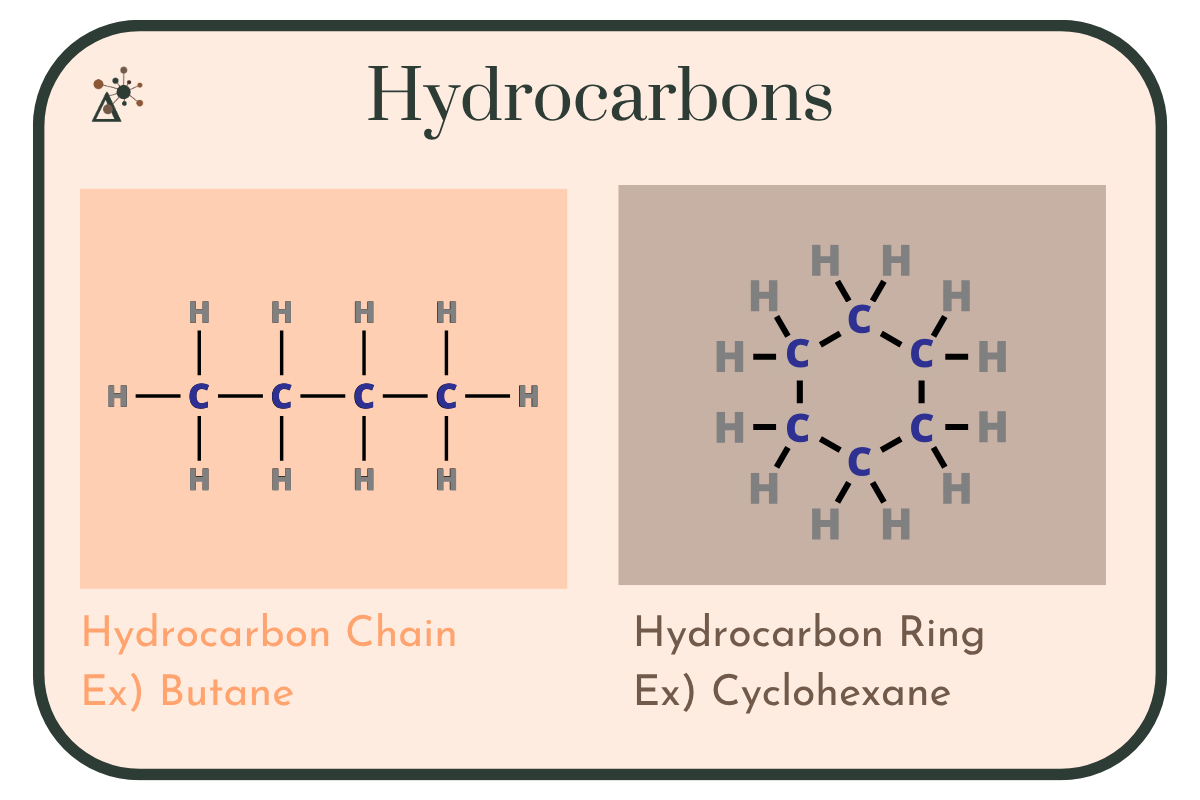
Image 1, Hydrocarbons. Above shows two diagrams of hydrocarbon molecules. On the left, in an orange box, is a hydrocarbon chain labeled butane, drawn as four Carbons in a row with Hydrogens attached above, below, and at each end. On the right, in a taupe box, is a hydrocarbon ring labeled cyclohexane, drawn as six Carbons in a hexagon with two Hydrogens attached to each Carbon.
Hydrocarbons are nonpolar because carbon and hydrogen have very similar electronegativities, meaning they pull on shared electrons with nearly equal strength. The electrons sit almost evenly between the two atoms, so no partial positive or partial negative regions form.
This matters because of how water behaves. Water is a polar molecule, and water molecules stick to each other through hydrogen bonds. To dissolve something, water has to form those same attractions with the solute (molecule that is being dissolved). A hydrocarbon has no partial charges to offer, so water molecules ignore it and hydrogen bond with each other instead — pushing the hydrocarbon out of the way. That exclusion is what we observe as oil separating from vinegar in salad dressing.
Quick check: Hydrophobic molecules aren't repelled by water in the sense of being pushed away by a force. They're simply left out, because water bonds more strongly with itself.
Lipids Are the Exception to the Monomer Rule
With other macromolecules, a single repeating unit is described as a monomer. Carbohydrates are built from monosaccharides, proteins from amino acids, and nucleic acids from nucleotides. Link many monomers together and you get a polymer.
Lipids break that pattern. They have no true monomer, and therefore no true polymer. Of all the biology macromolecules, lipids are the most structurally diverse — a triglyceride and a steroid look almost nothing alike, but both are lipids because both refuse to dissolve in water.
The Major Groups of Lipids
Fats
A common building block of many lipids is the fatty acid, a hydrocarbon chain with a carboxyl (–COOH) functional group attached at one end.
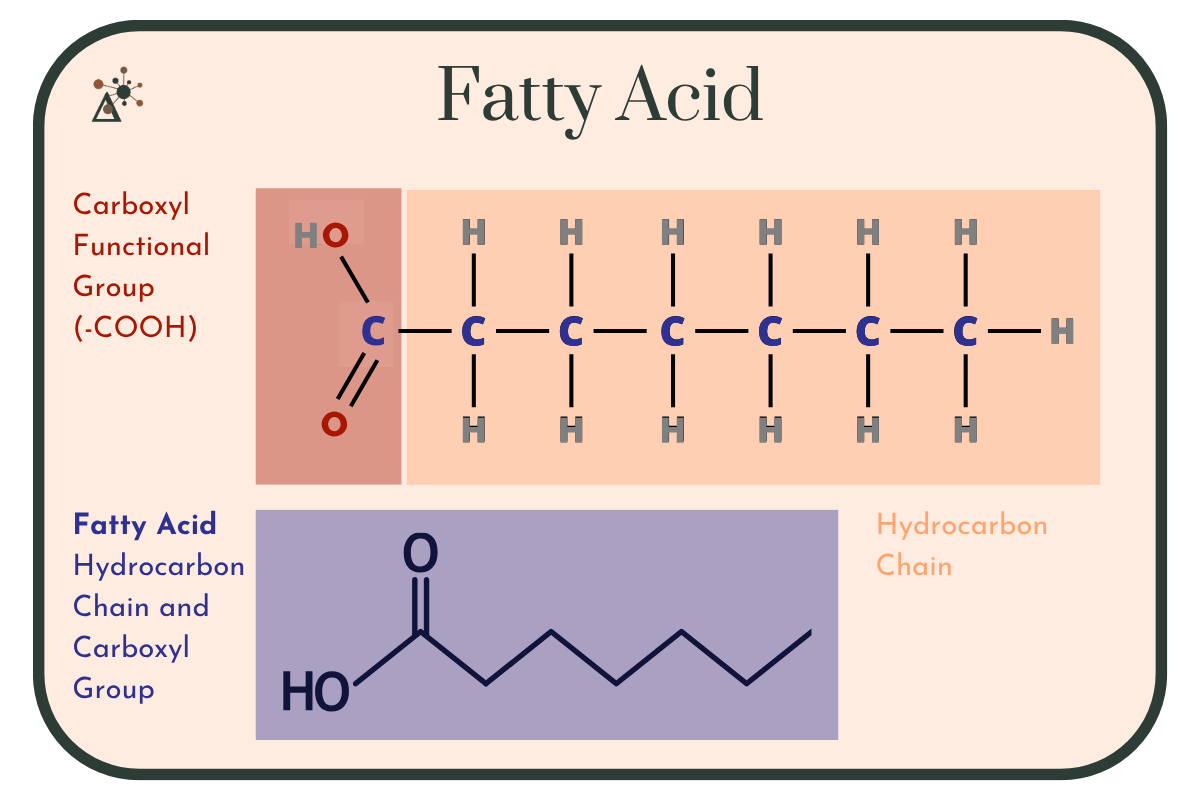
Image 2, Fatty Acid. Above shows the same fatty acid drawn two ways. On top, boxed in red on the left, is the carboxyl functional group, negative COOH, with an OH above the Carbon and a double bonded Oxygen below it. Extending to the right in an orange box is the hydrocarbon chain, drawn as six Carbons each bonded to Hydrogens. Below, in a purple box, is the same molecule drawn as a simplified skeletal structure, with HO on the left, a double bonded Oxygen above, and the hydrocarbon chain drawn as a zigzag line.
Fats are made of three fatty acids linked to one glycerol molecule, forming a triglyceride. These molecules are assembled through dehydration reactions between the hydroxyl groups of glycerol and the carboxyl groups of the fatty acids. Each bond formed is called an ester linkage.
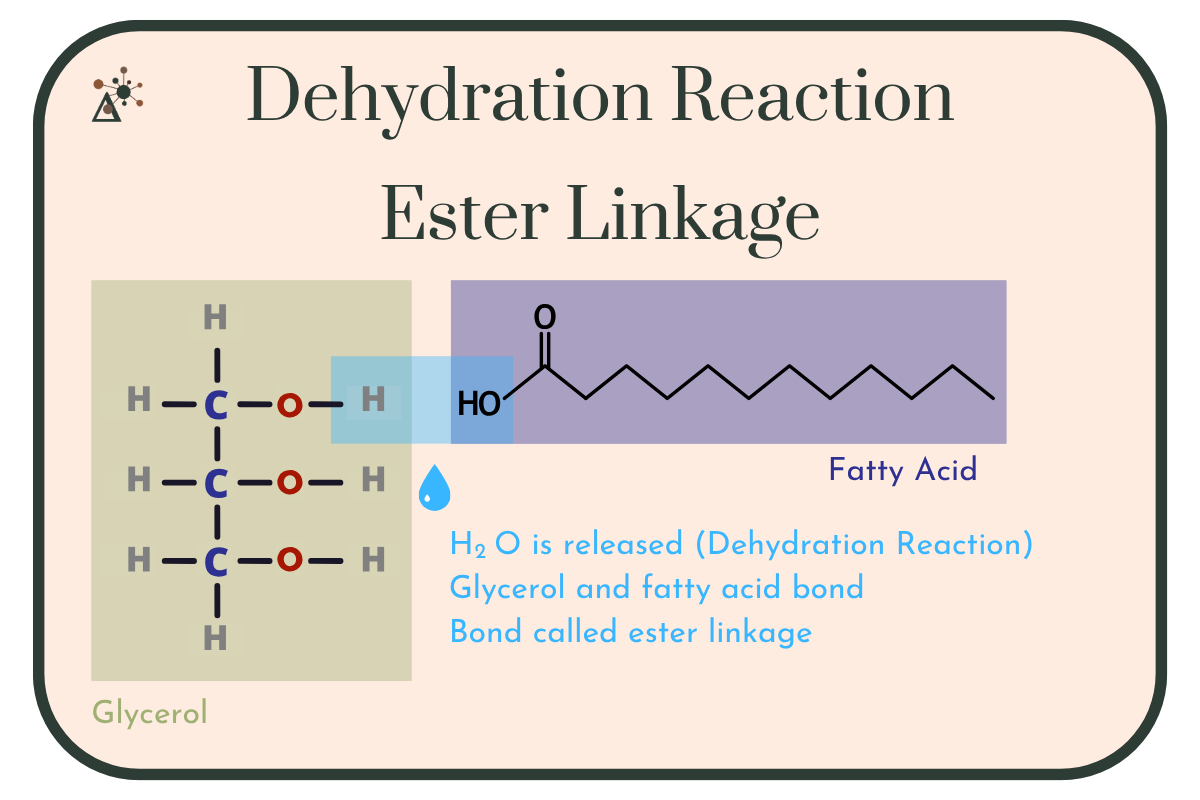
Image 3, Dehydration Reaction, Ester Linkage. Above shows a glycerol molecule in a green box on the left, with three Oxygen and Hydrogen groups extending to the right. In a purple box on the right is a fatty acid with a carboxyl group facing the glycerol. Two blue highlights mark the Hydrogen coming from glycerol and the OH coming from the fatty acid, with a water droplet between them. Blue text reads: H2O is released, Dehydration Reaction. Glycerol and fatty acid bond. Bond called ester linkage.
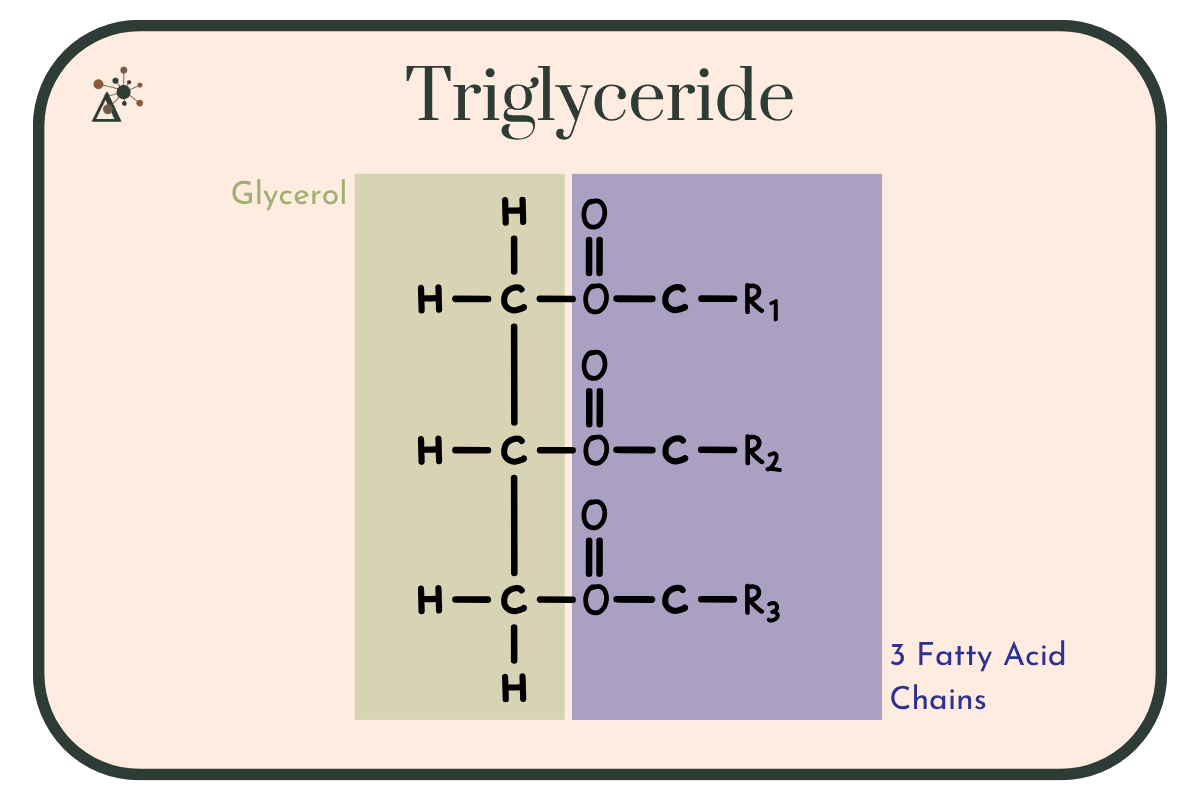
Image 4, Triglyceride. Above shows a triglyceride molecule. On the left, in a green box labeled Glycerol, is a backbone of three Carbons. On the right, in a purple box labeled 3 Fatty Acid Chains, are three chains labeled R1, R2, and R3. Each fatty acid connects to the glycerol through an ester linkage, drawn as an Oxygen bonded to a Carbon with a double bonded Oxygen above it.
To reiterate: because lipids have no true monomers, they have no true polymers. Fatty acids and glycerol build triglycerides, but we don't call them monomers, and a triglyceride isn't a polymer.
Saturated vs. Unsaturated Fatty Acids
Not all fatty acids are shaped the same, and that shape changes everything about how a fat behaves.
Saturated fatty acids have no double bonds between carbons. Every carbon holds as many hydrogens as it can, meaning it is "saturated" with hydrogen. These straight chains pack tightly together, so saturated fats (like butter and lard) are typically solid at room temperature.
Unsaturated fatty acids contain one or more carbon-carbon double bonds. Each double bond creates a kink in the chain, preventing tight packing. Unsaturated fats (like olive oil and canola oil) are typically liquid at room temperature.
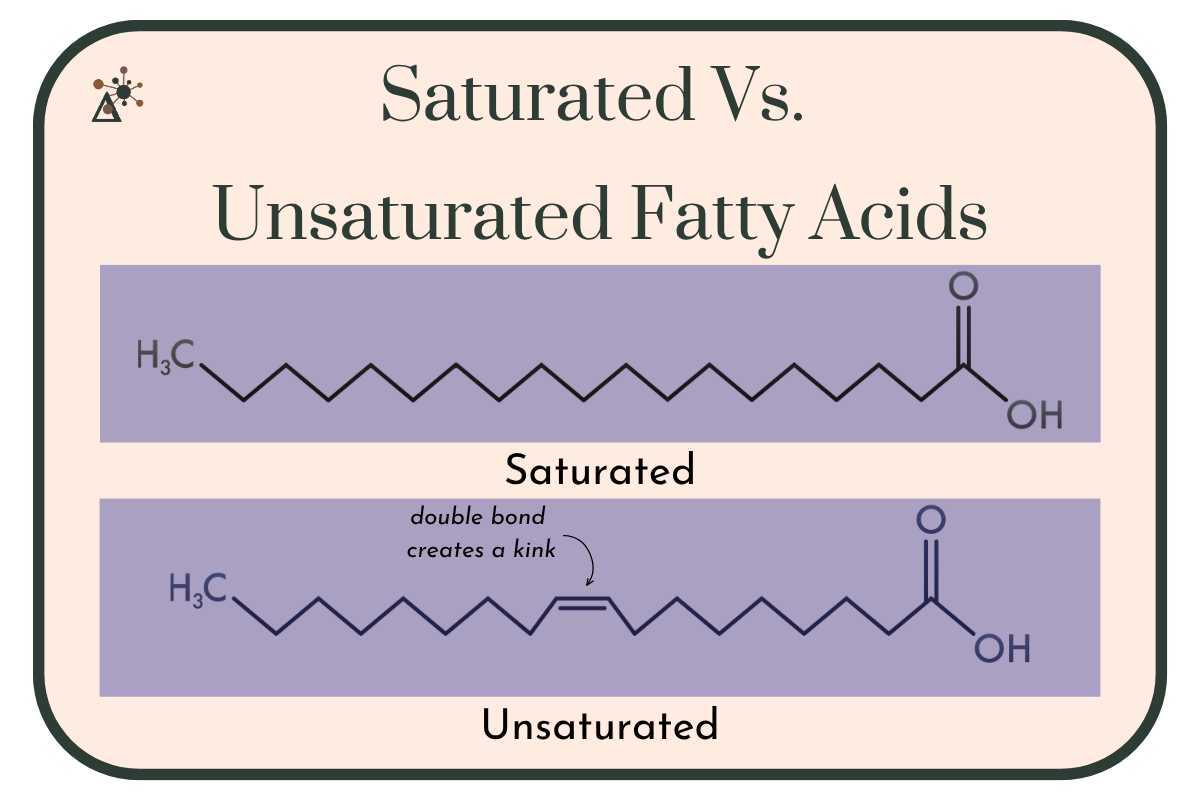
Image 5, Saturated Vs. Unsaturated Fatty Acids. Above shows two fatty acids drawn as skeletal structures in purple boxes. The top molecule, labeled Saturated, is an even zigzag chain with no double bonds, ending in a carboxyl group with a double bonded Oxygen and an OH. The bottom molecule, labeled Unsaturated, has one Carbon to Carbon double bond in the middle of the chain that creates a bend. A handwritten note with an arrow points to the bend and reads, double bond creates a kink.
This is a perfect example of a core biology theme: structure determines function. One double bond is the difference between a solid and a liquid.
Steroids
Steroids are a group of lipids characterized by a core of four fused carbon rings: three six-carbon rings and one five-carbon ring. What distinguishes one steroid from another is the set of functional groups attached to that core.
Cholesterol is the most familiar steroid and the starting material your body uses to build many others, including the sex hormones testosterone and estrogen.
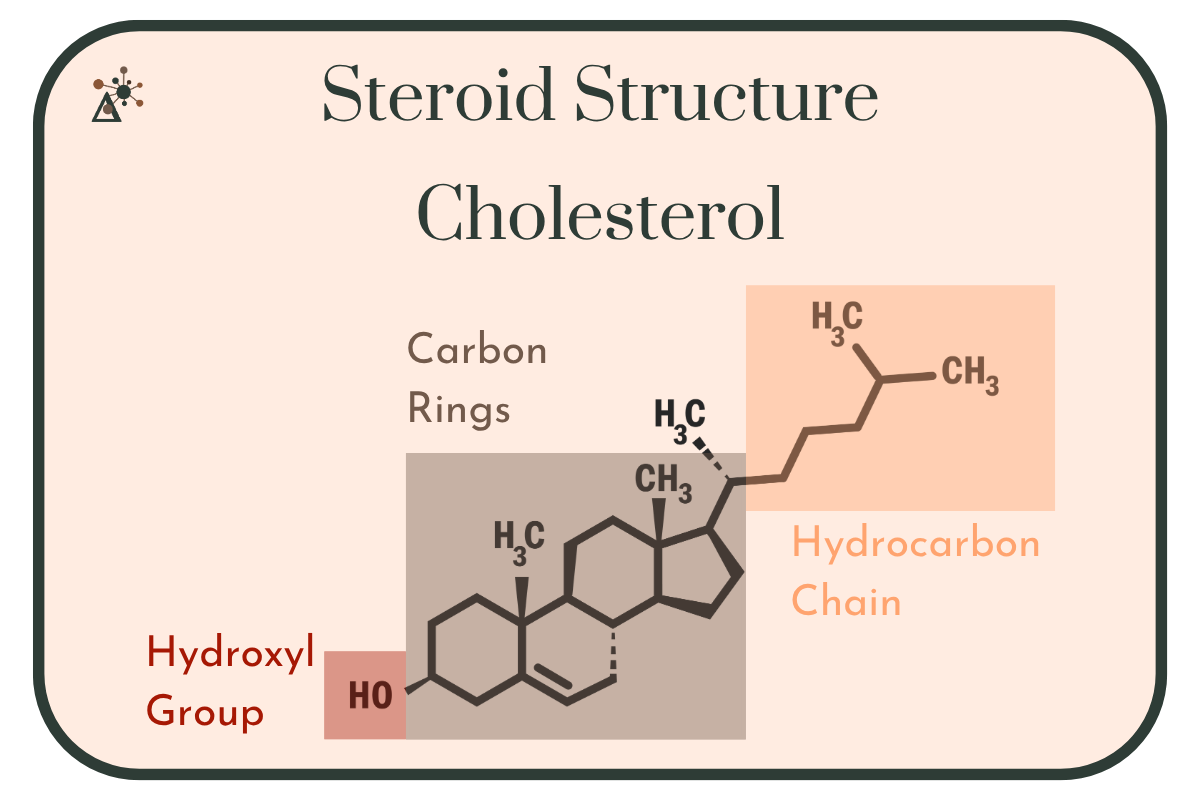
Image 6, Steroid Structure, Cholesterol. Above shows a cholesterol molecule. In a taupe box labeled Carbon Rings are four fused rings, three six-carbon rings and one five-carbon ring, with methyl groups attached. In an orange box on the upper right labeled Hydrocarbon Chain is a branched chain of Carbons extending from the five-carbon ring. In a red box on the lower left labeled Hydroxyl Group is an HO attached to the first ring.
Phospholipids
A third major group is the phospholipids. A phospholipid is built from a glycerol backbone attached to two fatty acid tails and one phosphate-containing group.
That combination creates a molecule with two personalities: a hydrophilic polar head (the phosphate group) and hydrophobic nonpolar tails (the fatty acids). Molecules with both properties are called amphipathic, and that dual nature is what makes cell membranes possible.
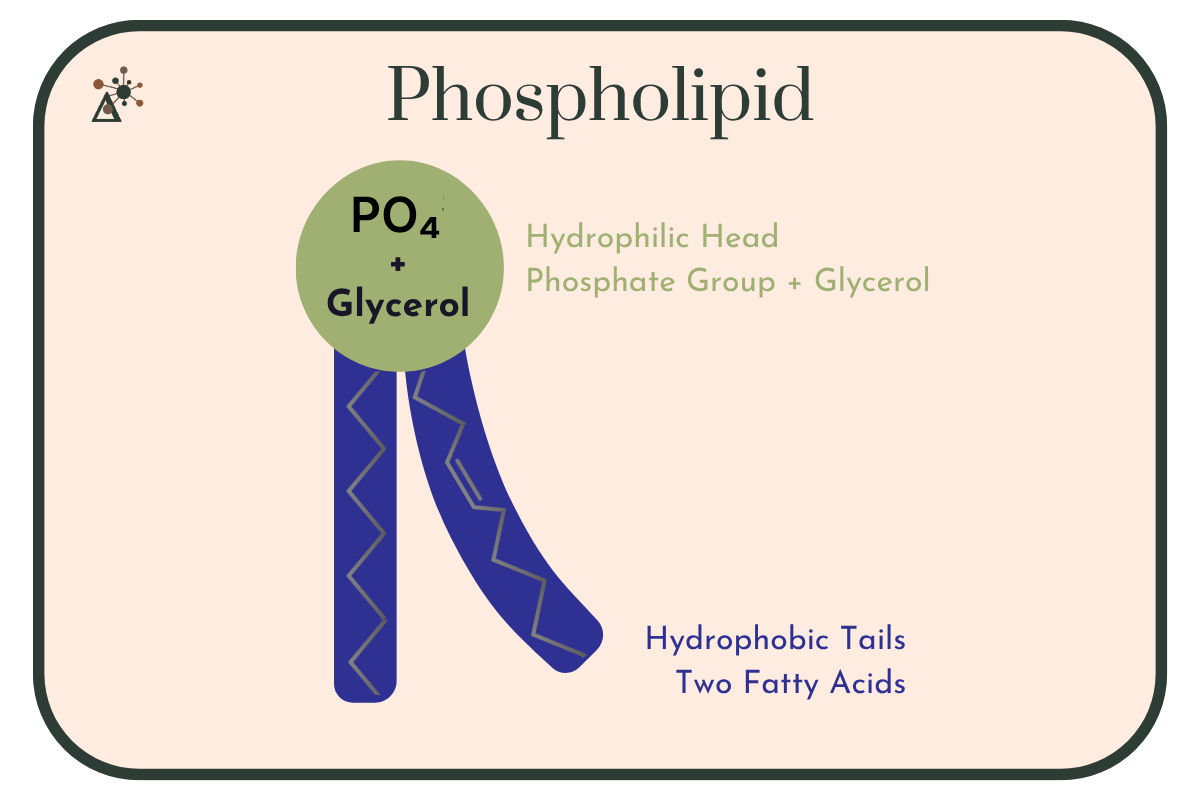
Image 7, Phospholipid. Above shows one phospholipid molecule. At the top is a green circle labeled PO4 plus Glycerol, with green text to the right reading Hydrophilic Head, Phosphate Group plus Glycerol. Extending downward from the circle are two navy blue fatty acid tails. The left tail is straight and the right tail bends partway down. Navy text reads Hydrophobic Tail, Two Fatty Acids.
Waxes
Waxes are a smaller lipid group made of long fatty acid chains linked to long-chain alcohols. They're firm, extremely water-repellent, and used as protective coatings. Examples of waxes are the shine on a leaf, the waterproofing on a duck's feathers, and the wax in your ears.
What Do Lipids Do?
Similar to other macromolecules, structure dictates function. Let's look at what each group actually does.
Fats
The long hydrocarbon chains in fats make them an excellent way to store chemical energy. Those carbon-hydrogen bonds hold a great deal of energy, and gram for gram, fats store roughly twice as much energy as carbohydrates.
In living organisms, carbohydrates serve as the source of immediate chemical energy. Fats create the surplus — a long-term reserve an organism can draw on when food is scarce. Fats also insulate against heat loss and cushion internal organs, which is why marine mammals like whales and seals carry thick blubber layers in cold water.
Steroids
In animal cells, cholesterol sits within the plasma membrane and acts as a fluidity buffer. At warm temperatures it restrains phospholipid movement and keeps the membrane from becoming too fluid; at cold temperatures it prevents phospholipids from packing together, keeping the membrane from becoming too rigid.
Steroids also serve as hormones, chemical messengers that:
regulate metabolism
influence immune and inflammatory responses
direct sexual development and reproduction
Phospholipids
The primary function of phospholipids is structural. In water, their amphipathic shape causes them to arrange into a phospholipid bilayer, with hydrophilic heads facing the watery environments inside and outside the cell, and hydrophobic tails tucked into the middle, away from water.
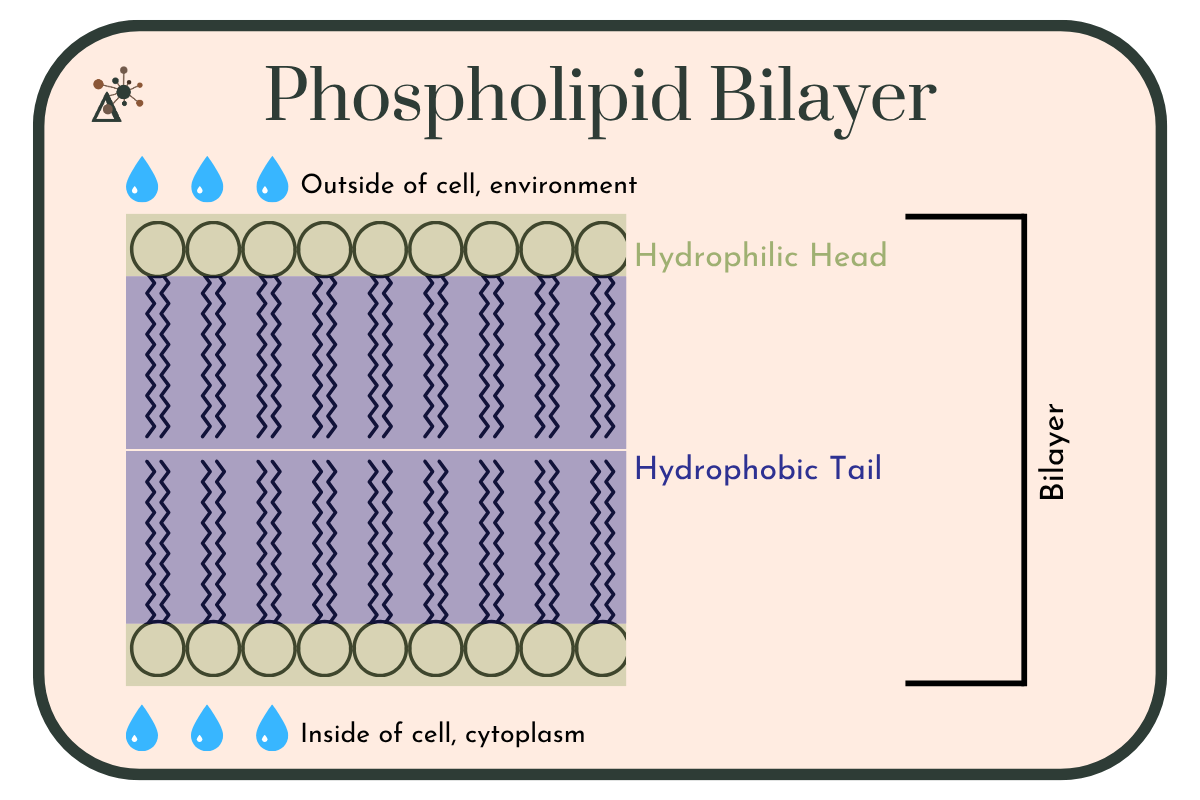
Image 8, Phospholipid Bilayer. Above shows two layers of phospholipids facing each other, marked by a bracket on the right labeled Bilayer. Along the top and bottom, in green, are rows of round hydrophilic heads. Facing inward from both rows, in purple, are the hydrophobic fatty acid tails. Water droplets and the label Outside of cell appear above the top layer, and the label Inside of cell appears below the bottom layer.
This bilayer forms the foundation of every cell membrane, and cell membranes are what separate a living cell from its environment. The hydrophobic core makes the membrane selectively permeable. This means that small nonpolar molecules like oxygen and carbon dioxide slip through easily, while ions and large polar molecules cannot cross without help.
The bilayer isn't the only component of a membrane, though. Proteins, cholesterol, and carbohydrates are embedded throughout it. We'll cover the fluid mosaic model and transport across membranes in another post!
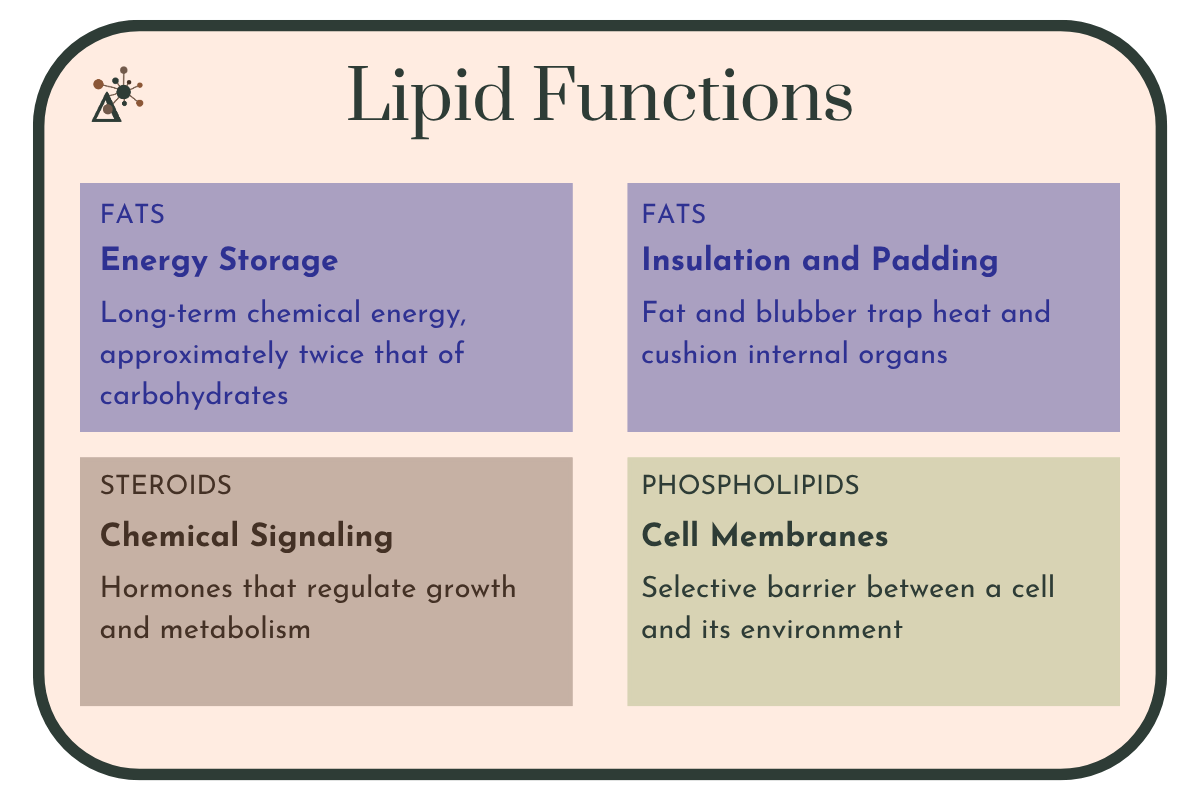
Image 9, Lipid Functions. Above shows four boxes. Two purple boxes describe fats. The first, Energy Storage, reads long-term chemical energy, approximately twice that of carbohydrates. The second, Insulation and Padding, reads fat and blubber trap heat and cushion internal organs. A taupe box for steroids, Chemical Signaling, reads hormones that regulate growth and metabolism. A green box for phospholipids, Cell Membranes, reads selective barrier between a cell and its environment.
Why Lipids Matter
Lipids are the most structurally varied of the four types of major macromolecules, and that variety is exactly why they're so useful. From one shared property — not dissolving in water — cells get:
Long-term energy storage in the form of triglycerides
Insulation and protection for organs and whole organisms
Chemical signaling through steroid hormones
A boundary for life itself in the phospholipid bilayer
That last one deserves emphasis. Before a cell can do anything else, it has to be separated from its surroundings, and lipids are what make that separation possible. Every cell you've ever seen under a microscope is held together by molecules that simply refuse to mix with water.
Lipids are one of the four major macromolecules — alongside proteins, carbohydrates, and nucleic acids — and life as we know it wouldn't work without them.
CreditsOpenStax. (2021). Biology 2e, Section 3.3 Lipids. https://openstax.org/books/biology-2e/pages/3-3-lipids. CC BY 4.0.