

 Image 1 of 3
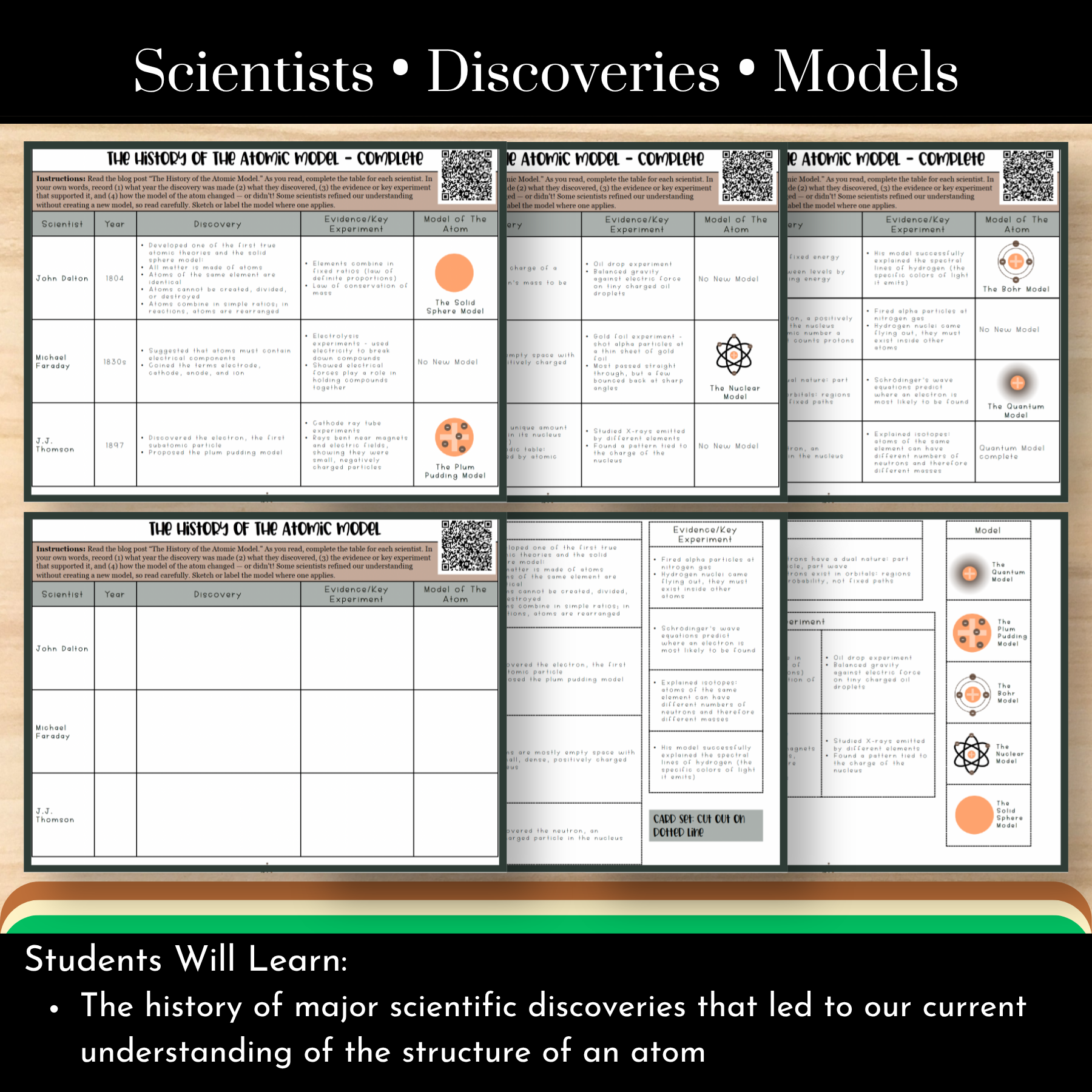 Image 2 of 3
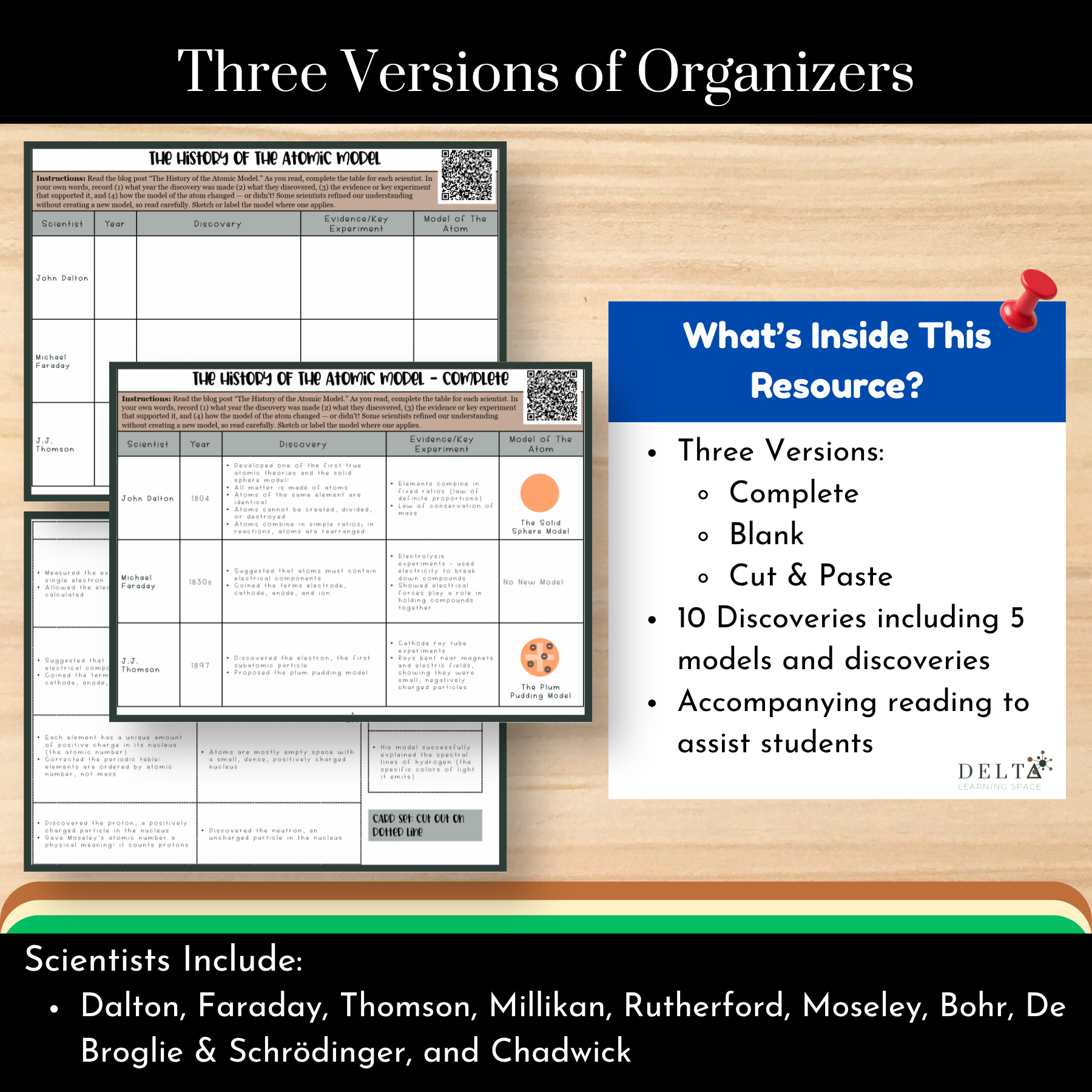 Image 3 of 3
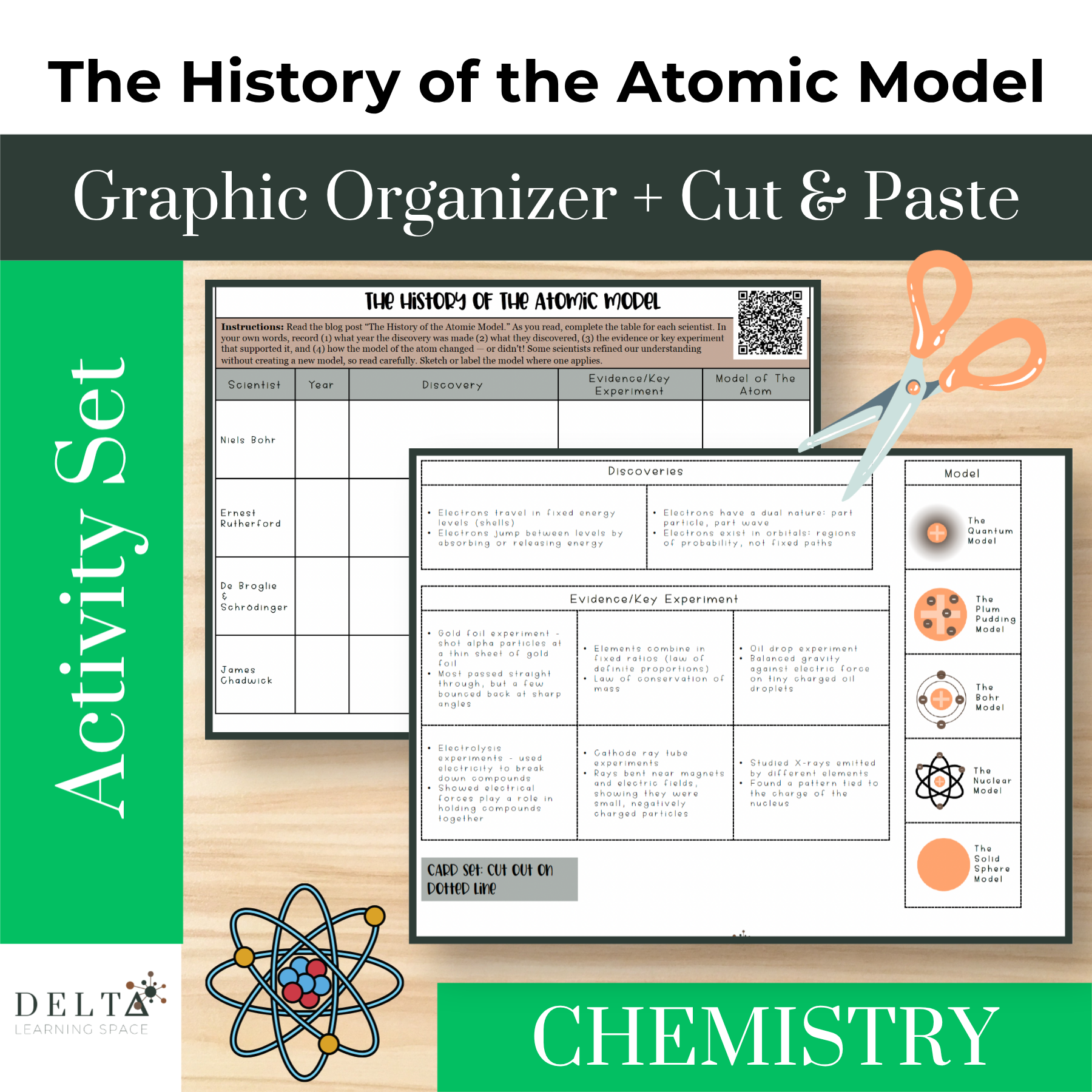
Atomic theory can feel like a list of names and dates to memorize. This graphic organizer turns it into a story, one where each scientist builds on, corrects, or refines the discovery before them, and where the model of the atom slowly comes into focus.
Students work through ten key figures, from Dalton's solid spheres to the quantum model, recording what each scientist discovered, the evidence or experiment behind it, and how the picture of the atom changed as a result. Some rows are marked "No New Model" on purpose — a lesson that not every discovery redraws the atom, and a natural way to reinforce the Nature of Science.
The organizer pairs with my free blog post "The History of the Atomic Model," included as a QR code on every page so students can pull up the reading on any device.
What's Included:
✔ Complete Version — the filled-in answer key, ready to use as a reference, a modeling tool, or a self-check station
✔ Blank Version — scientist names provided as anchors; students complete the rest from the reading
✔ Cut & Paste Version — years and select cells pre-filled, with ready-to-cut card sets for discoveries, evidence, and atomic models
✔ Card sets: 10 discovery cards, 10 evidence cards, and 5 labeled model cards
✔ Instructor Notes with differentiation guidance and printing tips
✔ QR code linking directly to the companion reading
✔ Terms of Use and Credits pages
Why teachers like it:
Three versions means three levels from one activity. Assign the blank organizer to on-level students, hand the cut & paste version to students who need scaffolding, and keep the answer key for you, your co-teacher, or your sub folder.
Great for:
Introducing atomic structure or atomic theory
Sub plans and station rotations
Review before an atomic structure test
Interactive notebooks
Homework or flipped-classroom reading
Want to try it first? Grab the free blank organizer from my store, then come back for the answer key and cut & paste version.
Thanks so much for supporting Delta Learning Space!
Atomic theory can feel like a list of names and dates to memorize. This graphic organizer turns it into a story, one where each scientist builds on, corrects, or refines the discovery before them, and where the model of the atom slowly comes into focus.
Students work through ten key figures, from Dalton's solid spheres to the quantum model, recording what each scientist discovered, the evidence or experiment behind it, and how the picture of the atom changed as a result. Some rows are marked "No New Model" on purpose — a lesson that not every discovery redraws the atom, and a natural way to reinforce the Nature of Science.
The organizer pairs with my free blog post "The History of the Atomic Model," included as a QR code on every page so students can pull up the reading on any device.
What's Included:
✔ Complete Version — the filled-in answer key, ready to use as a reference, a modeling tool, or a self-check station
✔ Blank Version — scientist names provided as anchors; students complete the rest from the reading
✔ Cut & Paste Version — years and select cells pre-filled, with ready-to-cut card sets for discoveries, evidence, and atomic models
✔ Card sets: 10 discovery cards, 10 evidence cards, and 5 labeled model cards
✔ Instructor Notes with differentiation guidance and printing tips
✔ QR code linking directly to the companion reading
✔ Terms of Use and Credits pages
Why teachers like it:
Three versions means three levels from one activity. Assign the blank organizer to on-level students, hand the cut & paste version to students who need scaffolding, and keep the answer key for you, your co-teacher, or your sub folder.
Great for:
Introducing atomic structure or atomic theory
Sub plans and station rotations
Review before an atomic structure test
Interactive notebooks
Homework or flipped-classroom reading
Want to try it first? Grab the free blank organizer from my store, then come back for the answer key and cut & paste version.
Thanks so much for supporting Delta Learning Space!