Prep-Free Lesson on Errors in Meiosis: Presentation & Guided Notes
Take your students' understanding of cell division to the next level with this comprehensive, ready-to-use lesson focused on errors in meiosis. Designed for high school science classes, this resource complements your teaching of meiosis and includes:
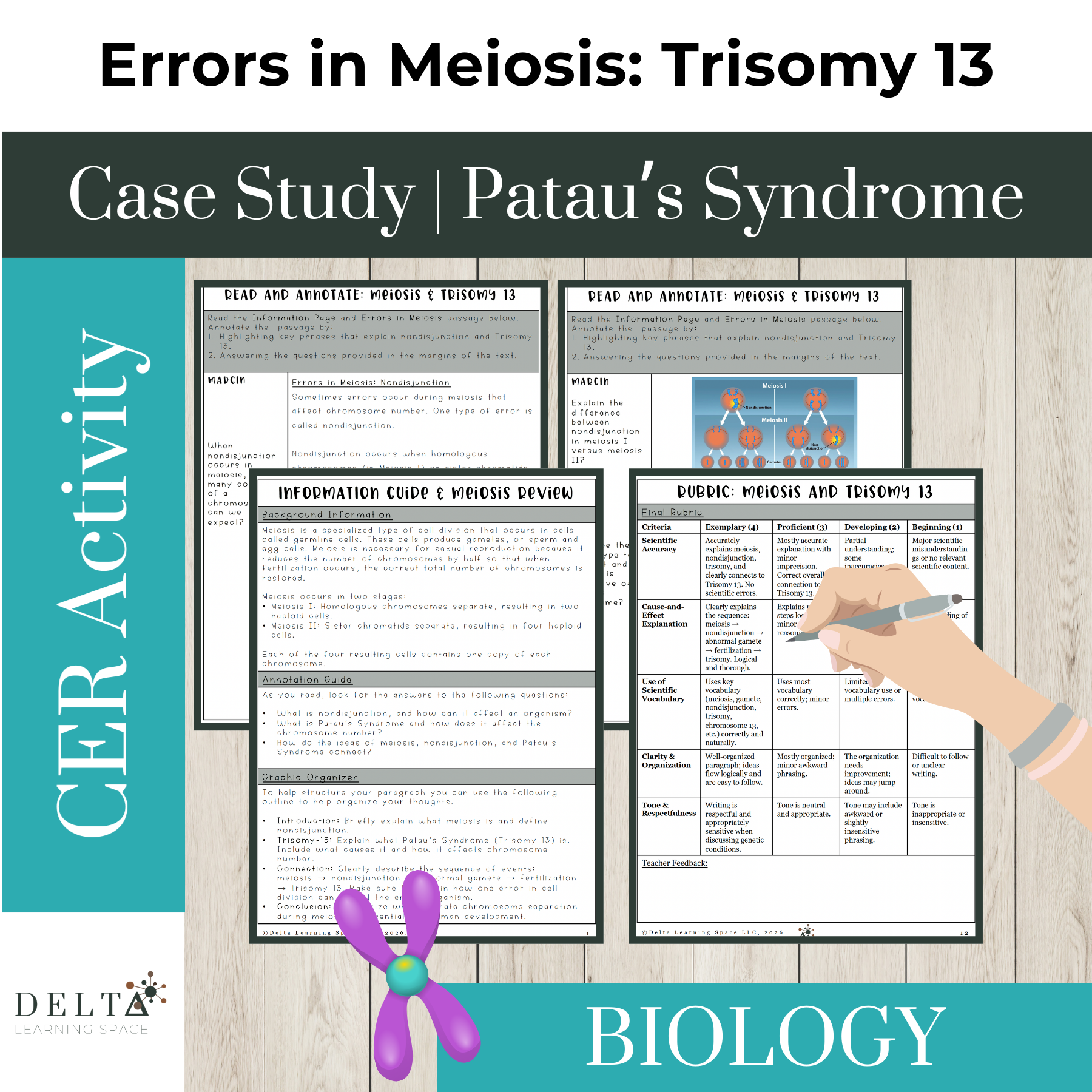
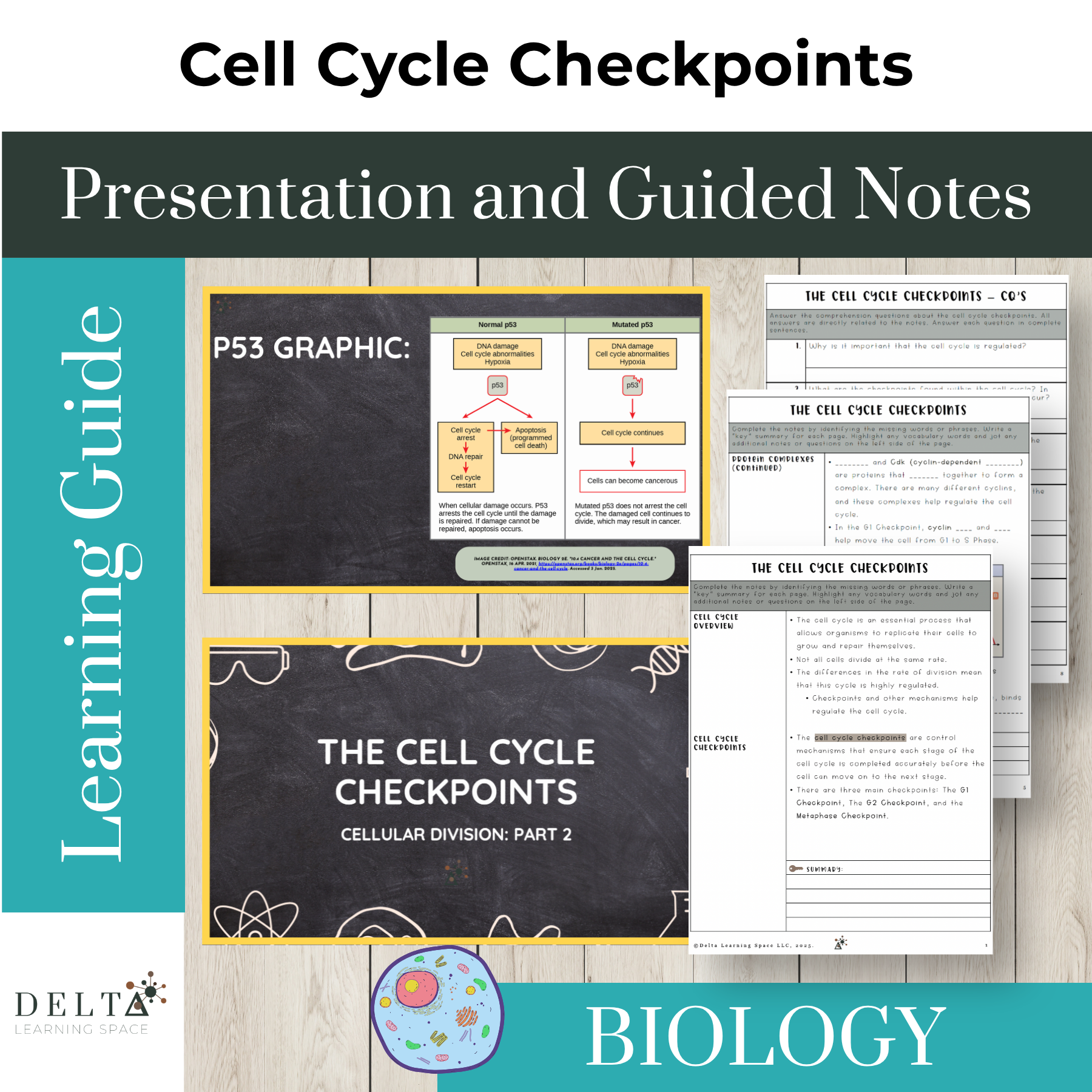
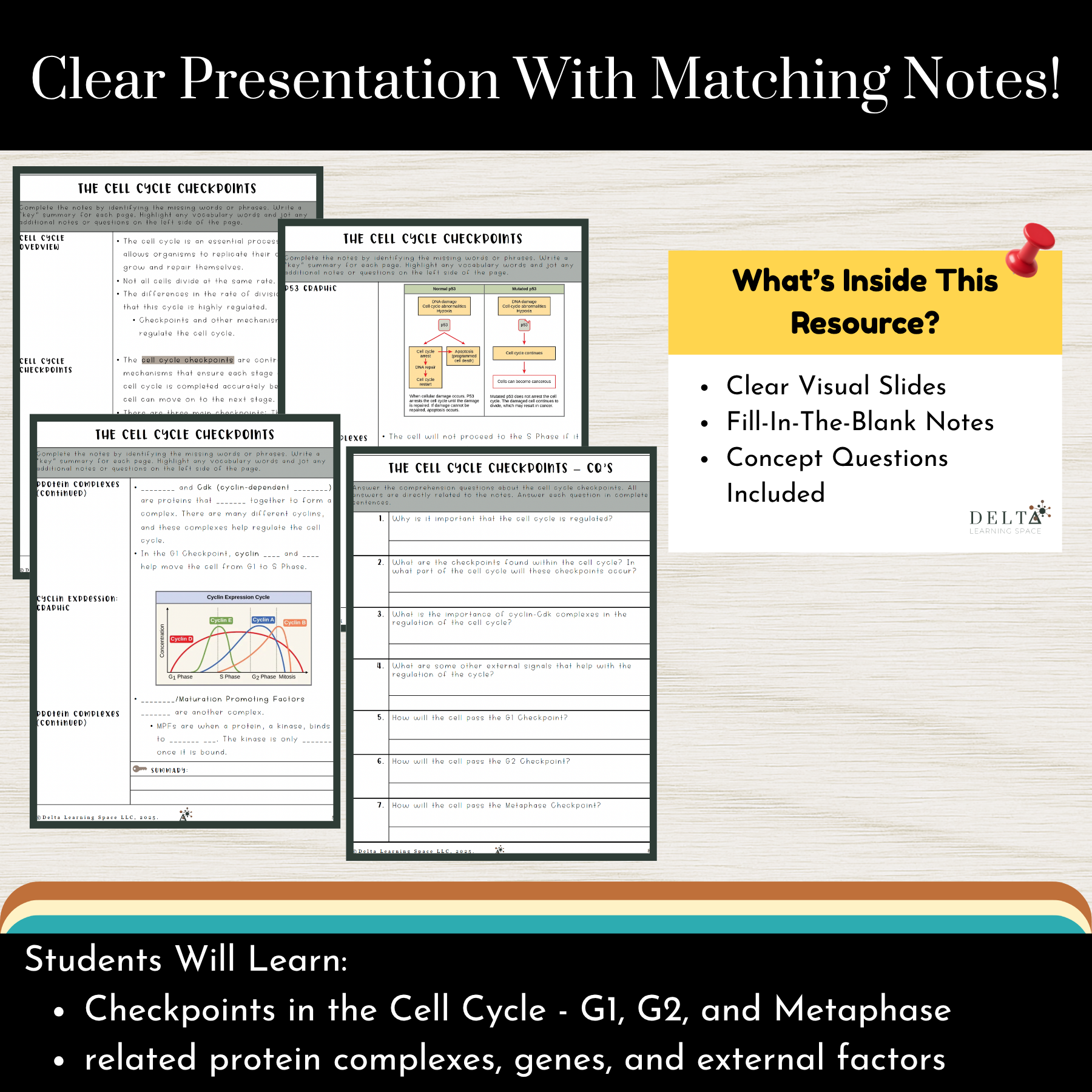
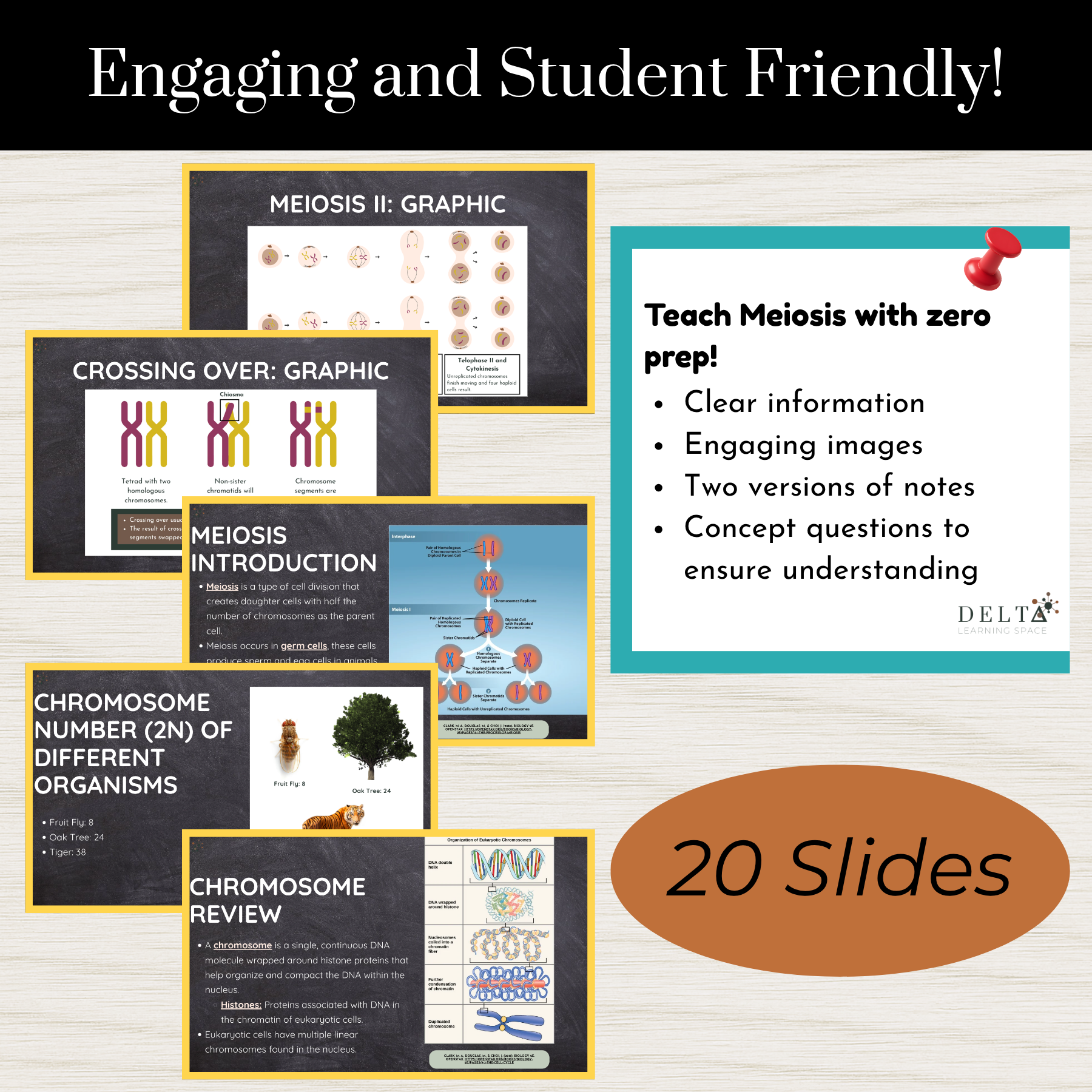
A visually engaging presentation explaining nondisjunction — what happens when chromosomes fail to separate correctly during meiosis — and its real-world genetic consequences.
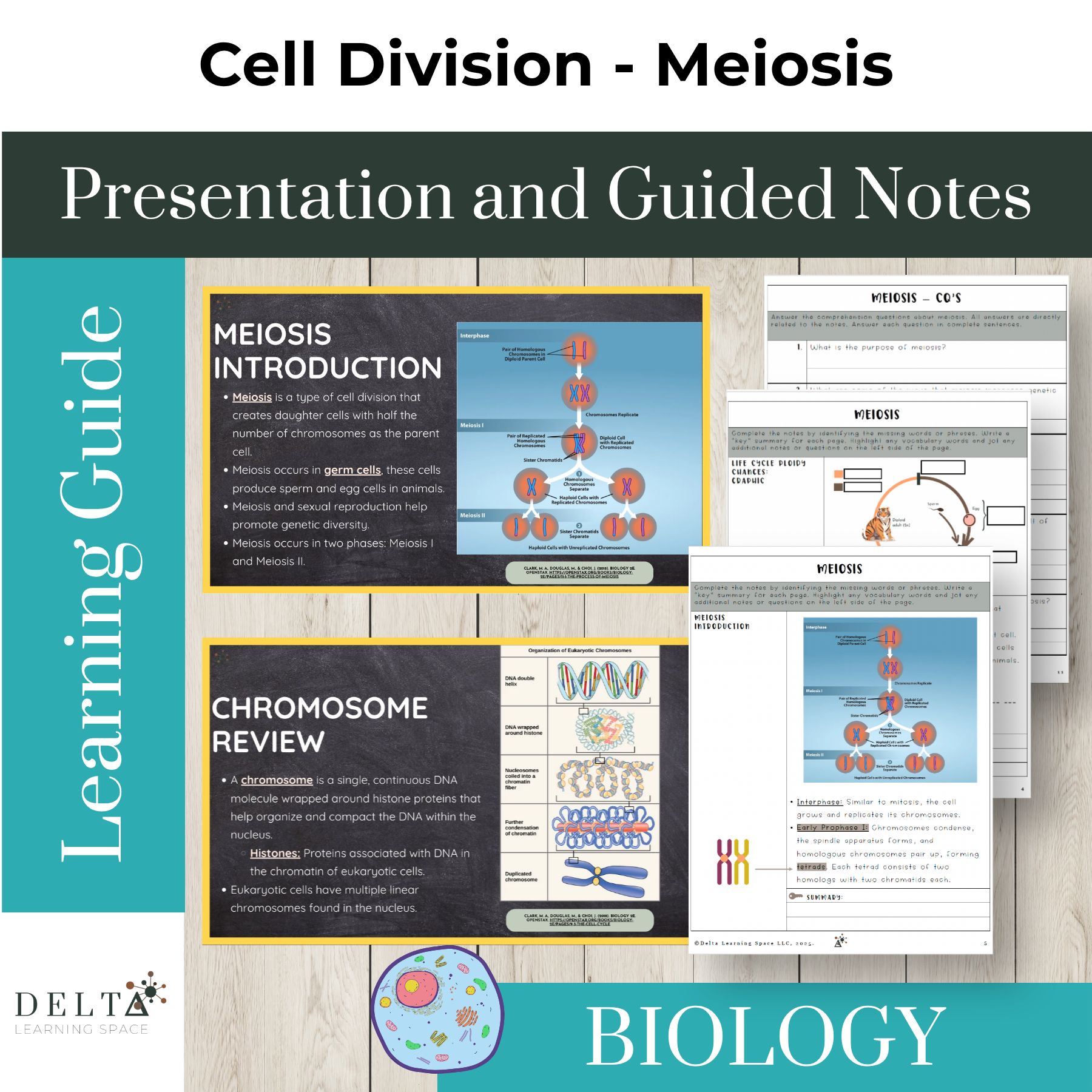
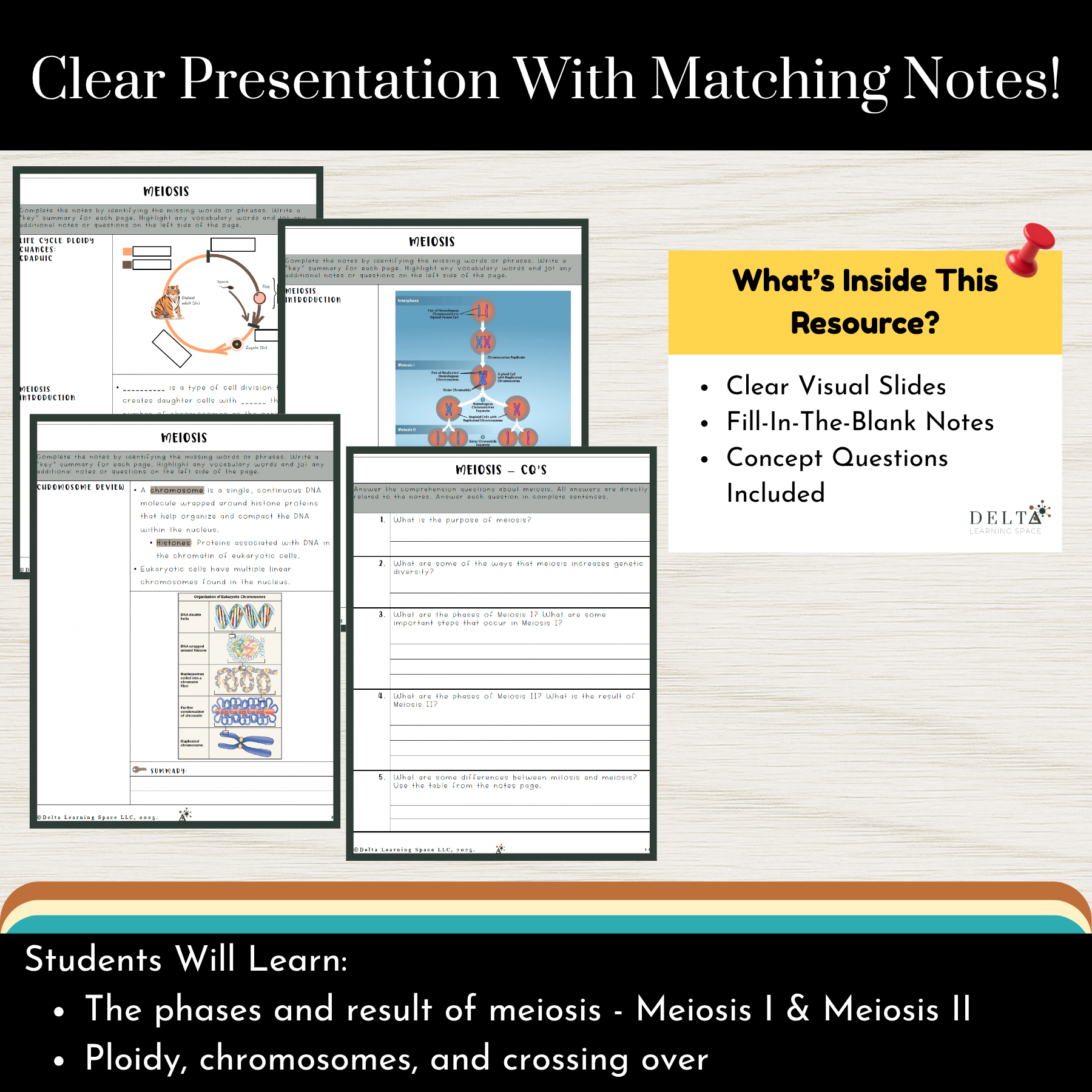
Guided notes in two formats: a complete version for reference and fill-in-the-blank notes to promote active learning.
Comprehension questions to reinforce key concepts and assess student understanding at the end of the lesson.
Why This Resource is a Must-Have:
No Prep Needed: Simply download and teach!
Active Learning: Students stay engaged with guided notes as they follow the presentation.
Clear and Engaging Diagrams: Clear diagrams show how nondisjunction in Meiosis I affects all four resulting gametes, while nondisjunction in Meiosis II affects only two.
Real Scientific Imagery: Karyotype and FISH (fluorescence in situ hybridization) images give students an authentic look at how chromosomal abnormalities are actually identified.
Thoughtful, Balanced Coverage: Four genetic conditions resulting from nondisjunction — Trisomy 13 (Patau syndrome), Trisomy 21 (Down syndrome), Klinefelter syndrome, and Trisomy X — are covered with accurate, respectful, and age-appropriate language, giving students a realistic picture that ranges from significant impact to often-asymptomatic presentations.
Part of a Comprehensive Unit: Ideal as the capstone to your cell division unit, following your cell cycle, mitosis, and meiosis lessons.
Prep-Free Lesson on Errors in Meiosis: Presentation & Guided Notes
Take your students' understanding of cell division to the next level with this comprehensive, ready-to-use lesson focused on errors in meiosis. Designed for high school science classes, this resource complements your teaching of meiosis and includes:
A visually engaging presentation explaining nondisjunction — what happens when chromosomes fail to separate correctly during meiosis — and its real-world genetic consequences.
Guided notes in two formats: a complete version for reference and fill-in-the-blank notes to promote active learning.
Comprehension questions to reinforce key concepts and assess student understanding at the end of the lesson.
Why This Resource is a Must-Have:
No Prep Needed: Simply download and teach!
Active Learning: Students stay engaged with guided notes as they follow the presentation.
Clear and Engaging Diagrams: Clear diagrams show how nondisjunction in Meiosis I affects all four resulting gametes, while nondisjunction in Meiosis II affects only two.
Real Scientific Imagery: Karyotype and FISH (fluorescence in situ hybridization) images give students an authentic look at how chromosomal abnormalities are actually identified.
Thoughtful, Balanced Coverage: Four genetic conditions resulting from nondisjunction — Trisomy 13 (Patau syndrome), Trisomy 21 (Down syndrome), Klinefelter syndrome, and Trisomy X — are covered with accurate, respectful, and age-appropriate language, giving students a realistic picture that ranges from significant impact to often-asymptomatic presentations.
Part of a Comprehensive Unit: Ideal as the capstone to your cell division unit, following your cell cycle, mitosis, and meiosis lessons.


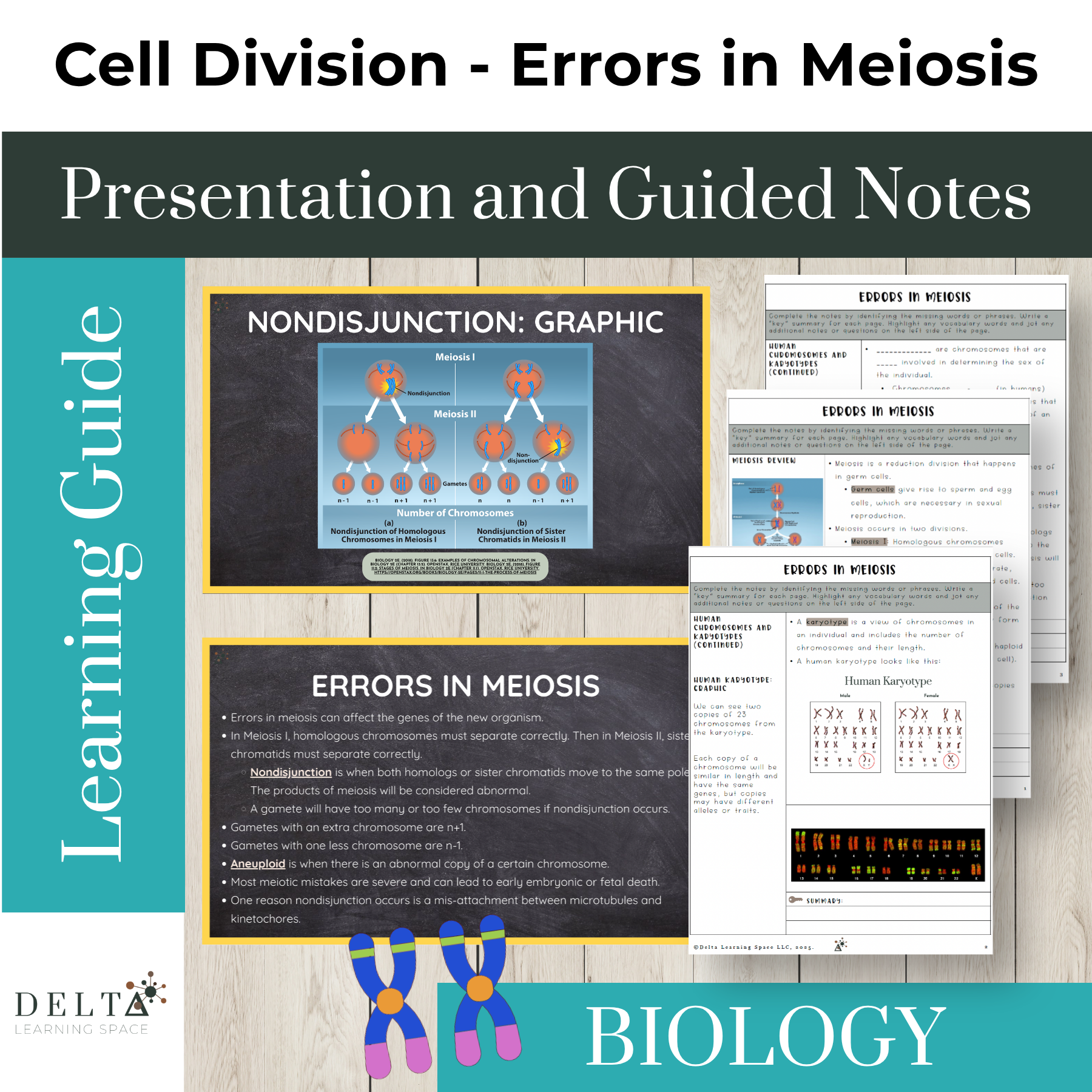 Image 1 of 3
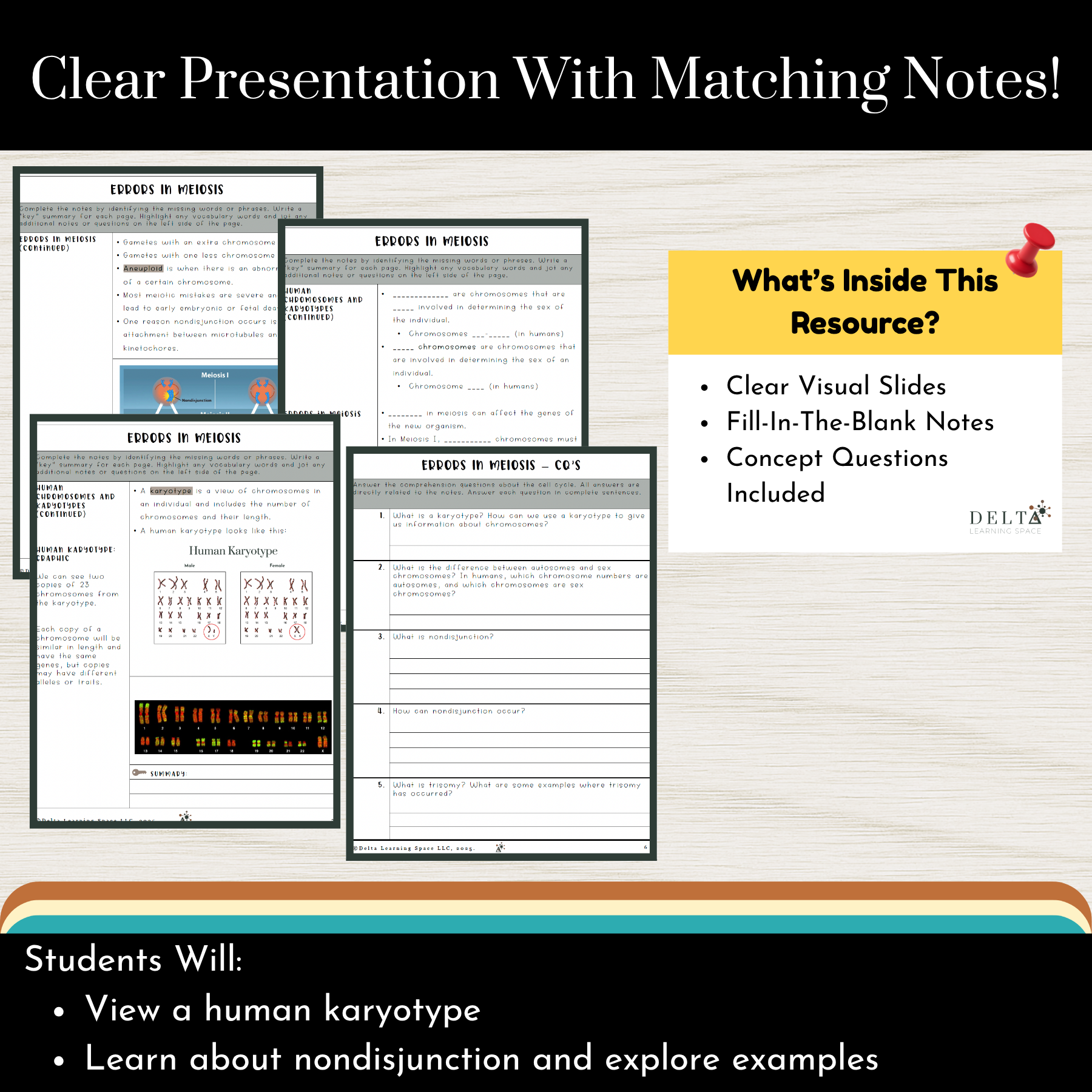 Image 2 of 3
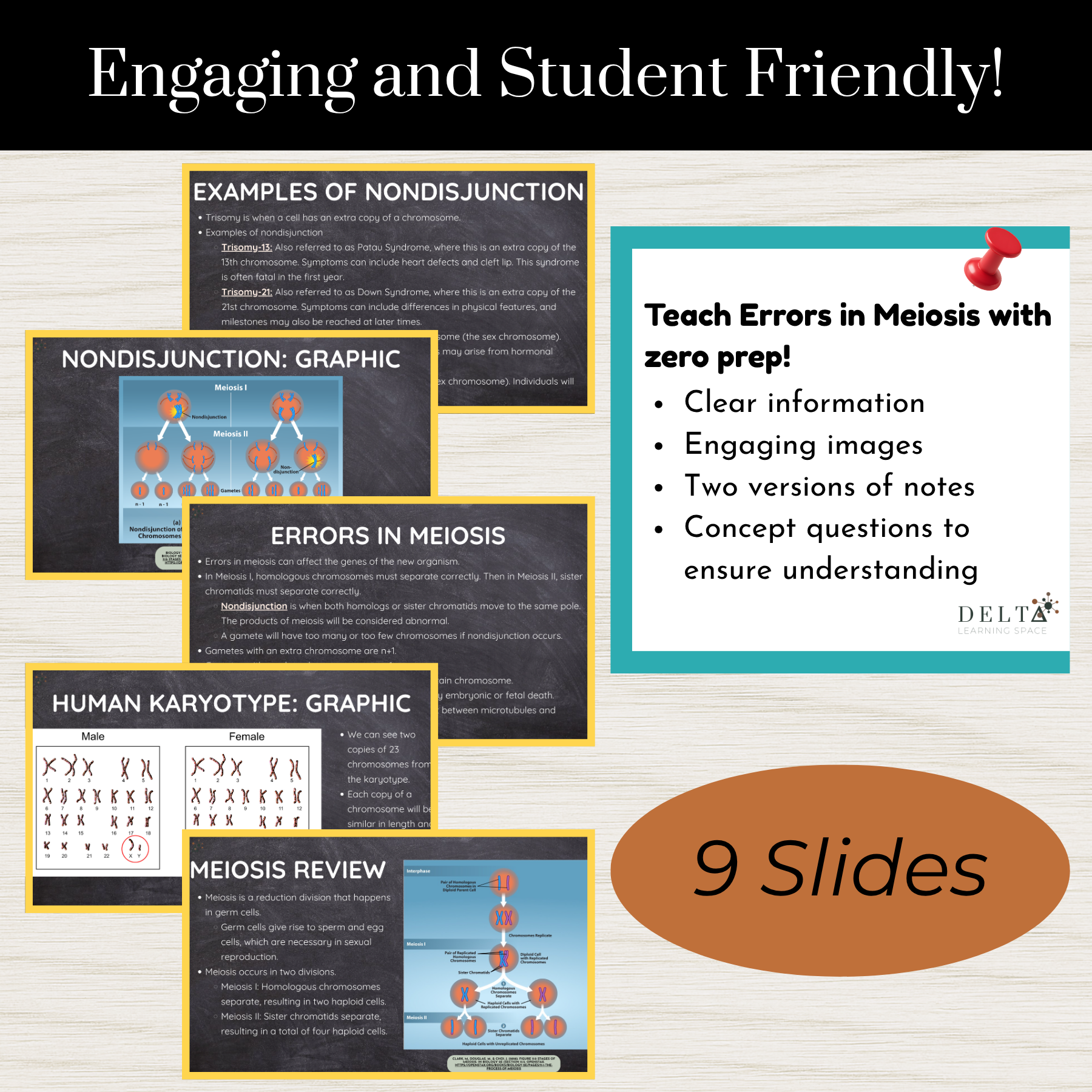 Image 3 of 3