Image 1 of 3
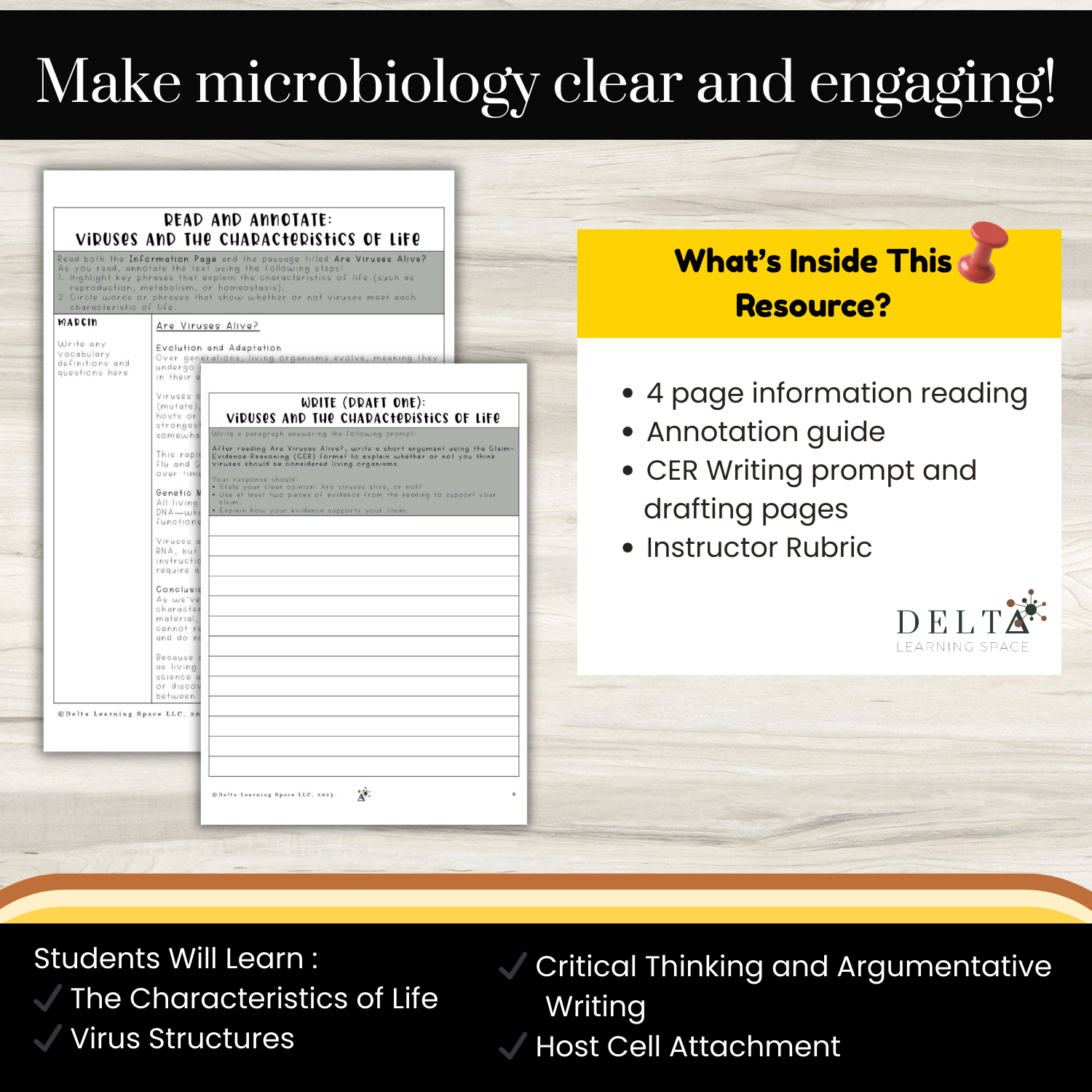 Image 2 of 3
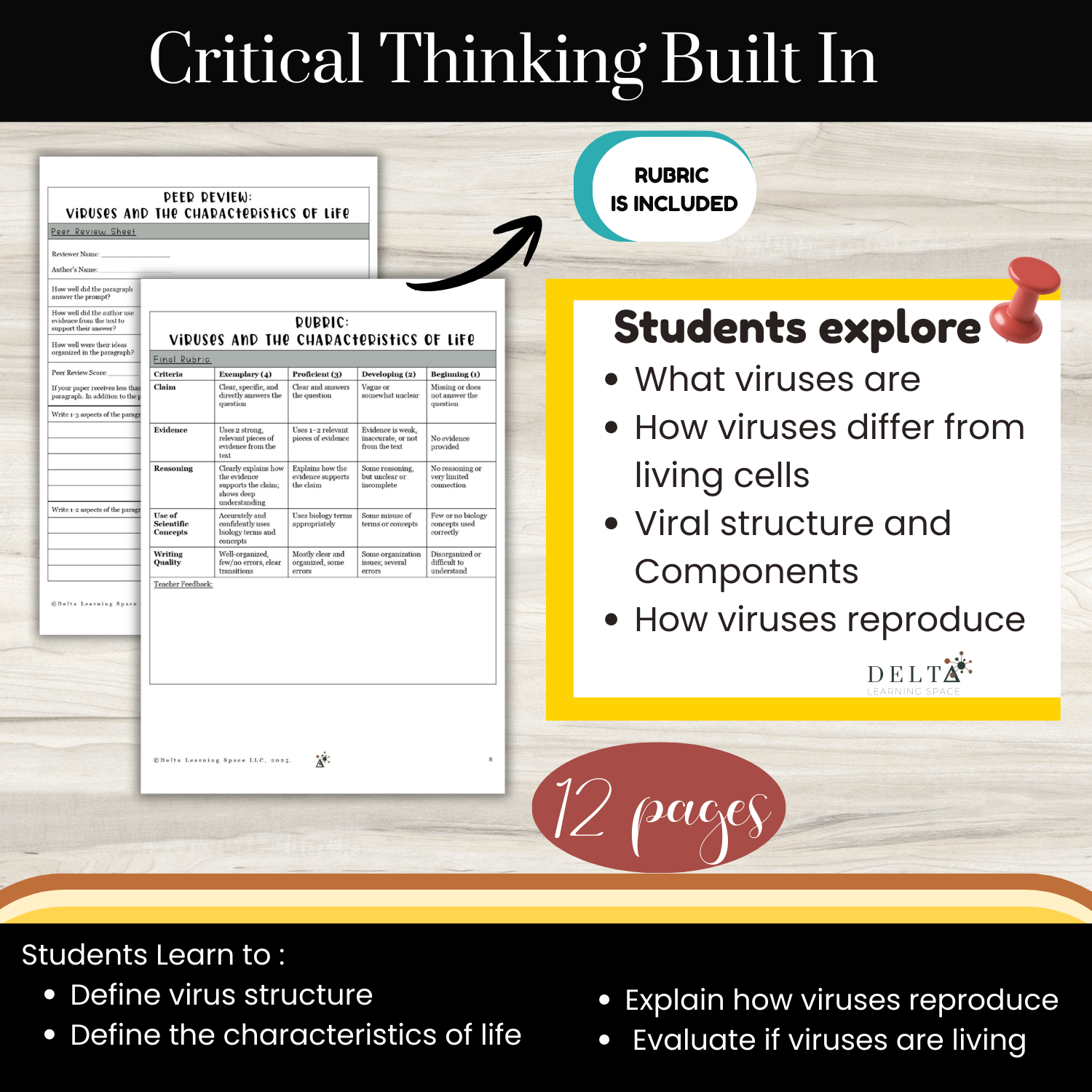 Image 3 of 3
Are viruses actually alive? It's one of biology's most debated questions — and your answer needs to be backed by evidence.
This isn't a fill-in-the-blank worksheet. This activity asks you to read real scientific information about viruses, analyze whether they meet the characteristics of life, form your own position, and defend it in writing using evidence and reasoning. That's the kind of thinking that biology exams — and science in general — actually reward.
What's inside:
A 4-page informational reading passage about viruses and the characteristics of life, written to be accessible without being oversimplified
An annotation guide that teaches you how to read scientifically, marking key evidence, identifying claims, and staying engaged with the text rather than just reading passively
A graphic organizer to help you sort and organize your evidence before you start writing, so your argument is structured before you put a single sentence on the page
A writing prompt and drafting pages that walk you through building a complete Claim-Evidence-Reasoning response — the format used in biology courses and science assessments across the country
A peer review checklist to evaluate your work (or a classmate's) before submitting a final response
A grading rubric is included so you know exactly what a strong response looks like before you write it
Perfect for:
Students in Grades 9–12 studying biology, life science, or the characteristics of life
Preparing for assessments that include scientific writing or extended response questions
Anyone who wants to practice forming and defending a scientific argument — a skill that comes up repeatedly through high school and beyond
Parents looking for a structured, intellectually challenging activity that goes beyond standard practice problems
This activity can be completed completely independently at home. Read, annotate, organize your evidence, and write your response. Everything you need to complete it is included, including the rubric so you can assess your own work honestly before you're done.
Are viruses actually alive? It's one of biology's most debated questions — and your answer needs to be backed by evidence.
This isn't a fill-in-the-blank worksheet. This activity asks you to read real scientific information about viruses, analyze whether they meet the characteristics of life, form your own position, and defend it in writing using evidence and reasoning. That's the kind of thinking that biology exams — and science in general — actually reward.
What's inside:
A 4-page informational reading passage about viruses and the characteristics of life, written to be accessible without being oversimplified
An annotation guide that teaches you how to read scientifically, marking key evidence, identifying claims, and staying engaged with the text rather than just reading passively
A graphic organizer to help you sort and organize your evidence before you start writing, so your argument is structured before you put a single sentence on the page
A writing prompt and drafting pages that walk you through building a complete Claim-Evidence-Reasoning response — the format used in biology courses and science assessments across the country
A peer review checklist to evaluate your work (or a classmate's) before submitting a final response
A grading rubric is included so you know exactly what a strong response looks like before you write it
Perfect for:
Students in Grades 9–12 studying biology, life science, or the characteristics of life
Preparing for assessments that include scientific writing or extended response questions
Anyone who wants to practice forming and defending a scientific argument — a skill that comes up repeatedly through high school and beyond
Parents looking for a structured, intellectually challenging activity that goes beyond standard practice problems
This activity can be completed completely independently at home. Read, annotate, organize your evidence, and write your response. Everything you need to complete it is included, including the rubric so you can assess your own work honestly before you're done.