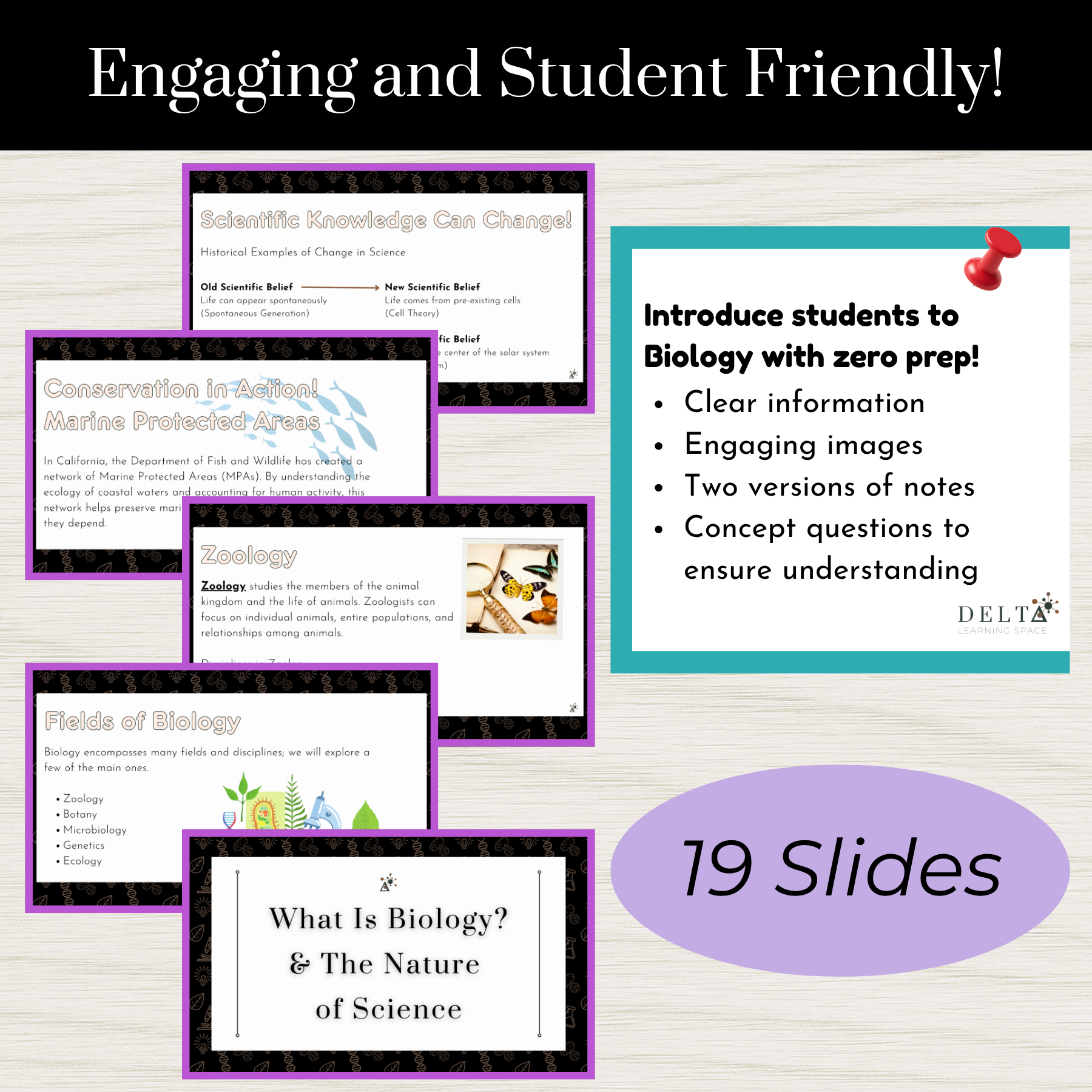
Prep-Free Lesson on Mitosis: Presentation & Guided Notes
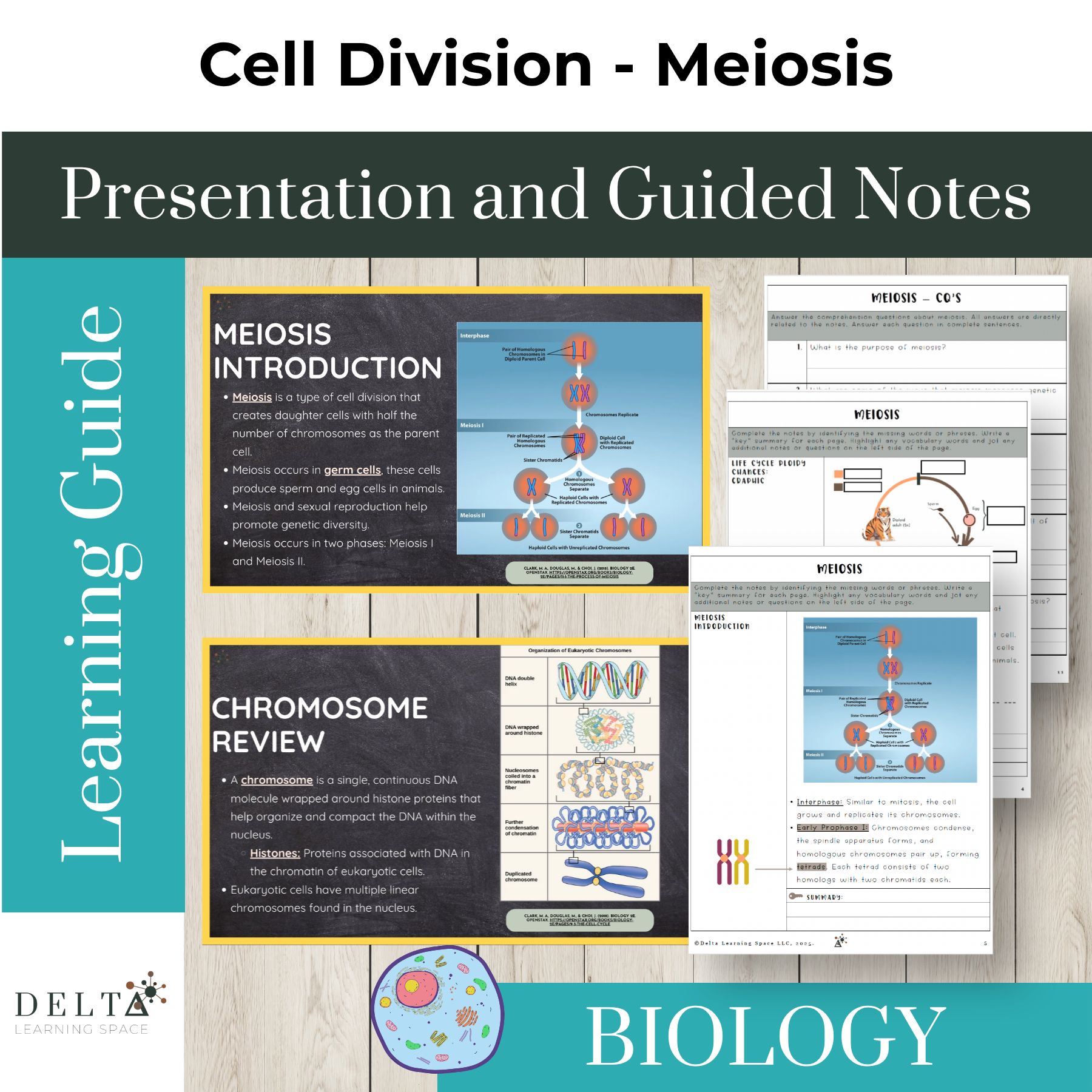
Take your students' understanding of cell division to the next level with this comprehensive, ready-to-use lesson focused on mitosis. Designed for middle and high school science classes, this resource complements your teaching of the cell cycle and includes:
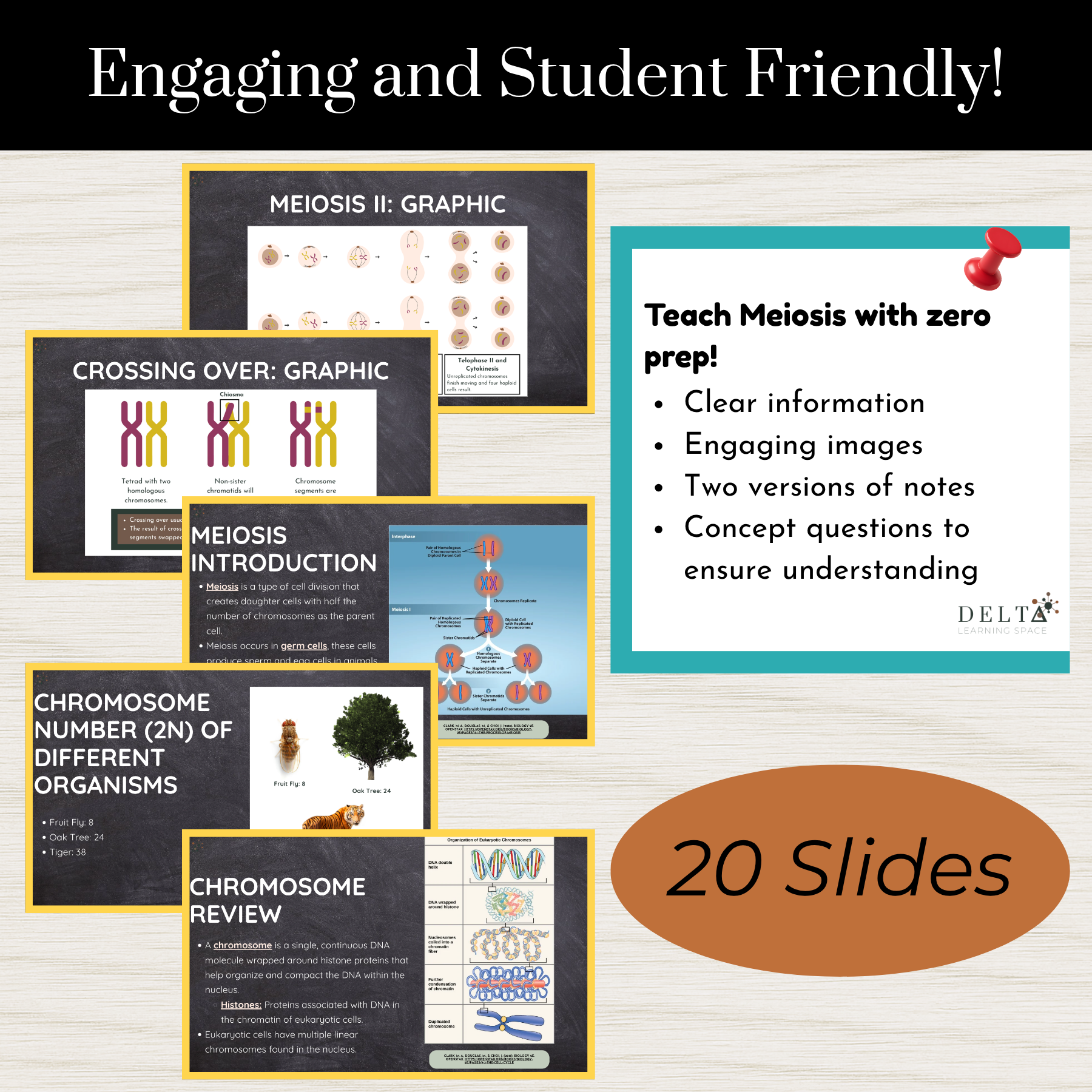
A visually engaging presentation walking students through the five sub-phases of mitosis (Prophase, Prometaphase, Metaphase, Anaphase, and Telophase) and how cytokinesis completes cell division in animal and plant cells.
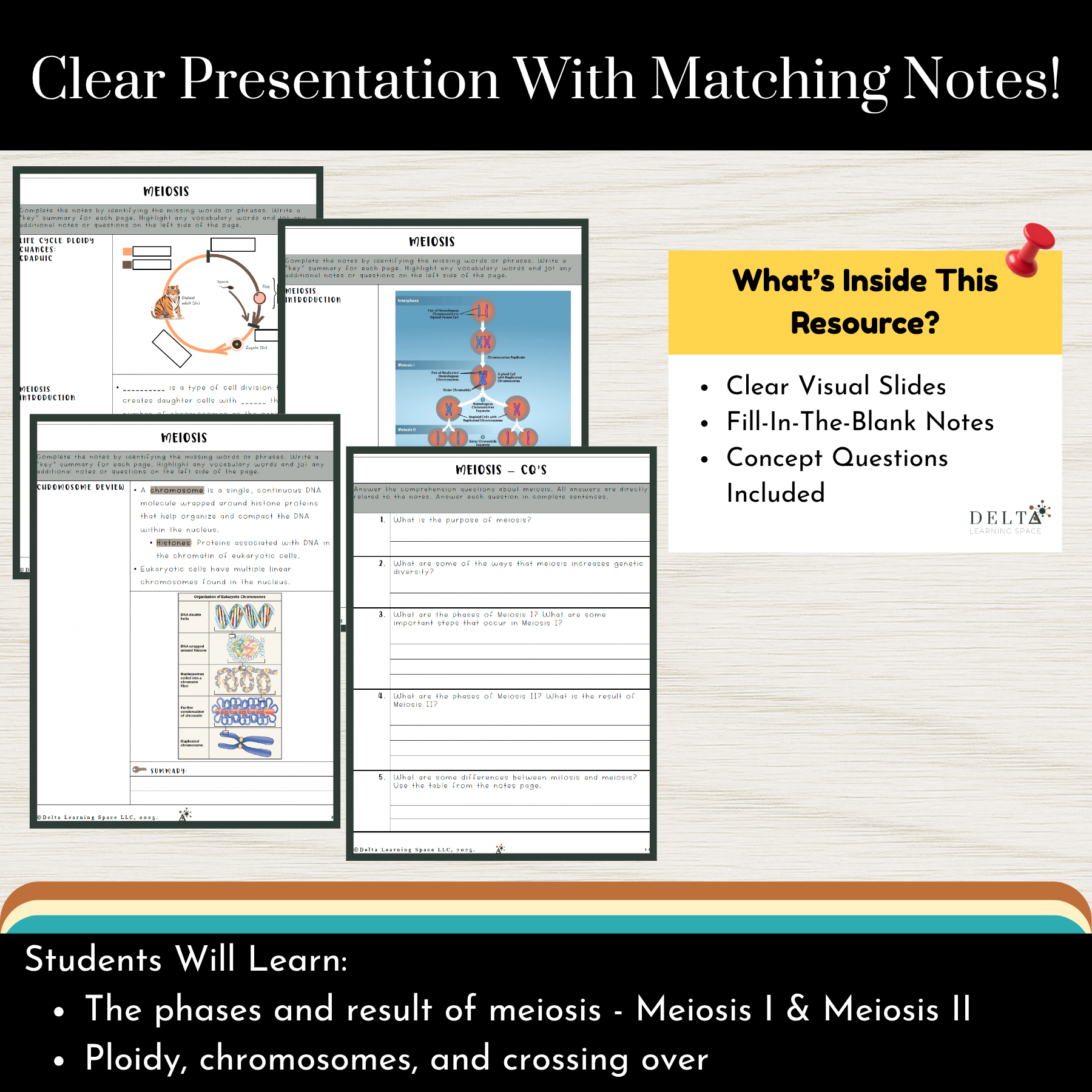
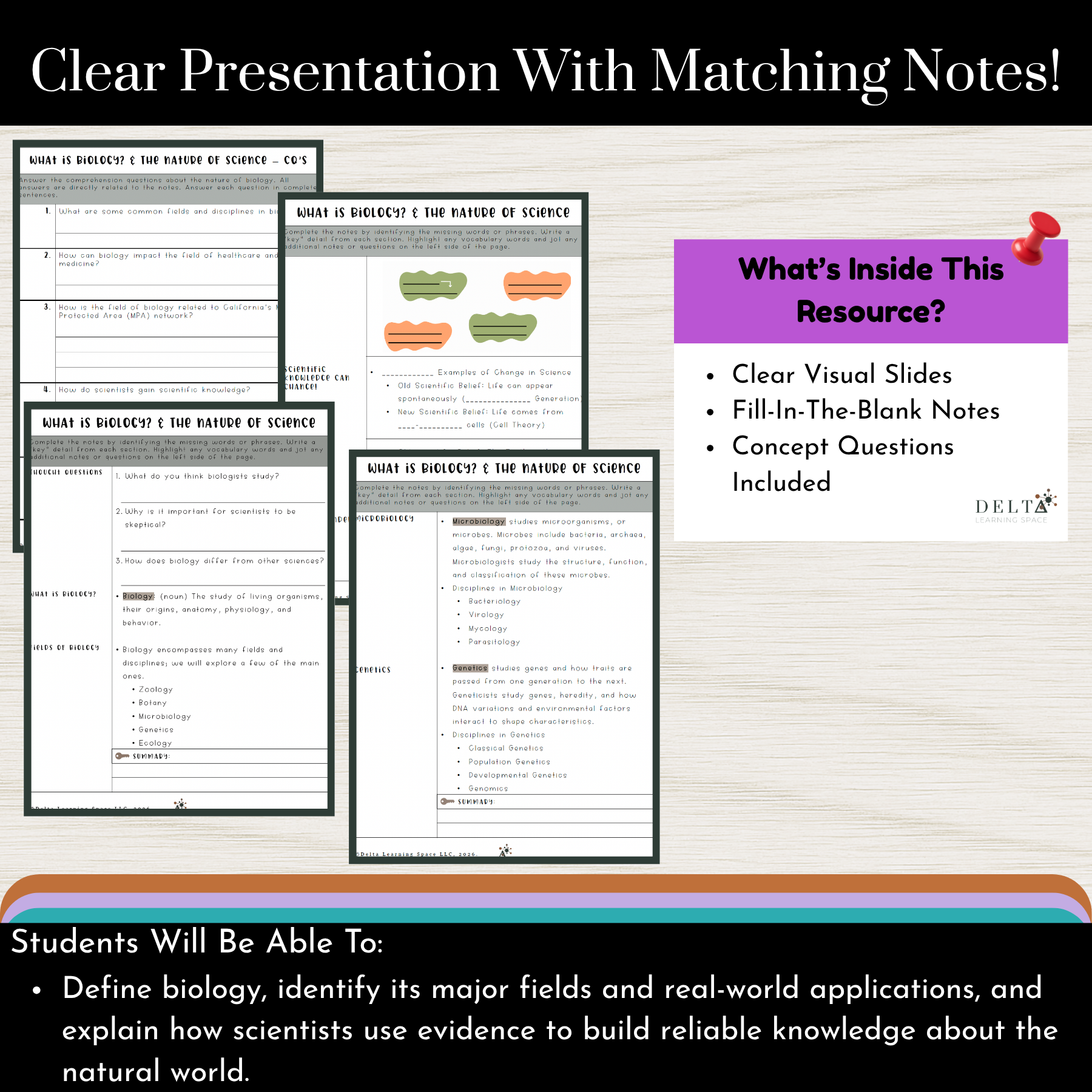
Guided notes in two formats: a complete version for reference and fill-in-the-blank notes to promote active learning.
Comprehension questions to reinforce key concepts and assess student understanding at the end of the lesson.
Why This Resource is a Must-Have:
No Prep Needed: Simply download and teach!
Active Learning: Students stay engaged with guided notes as they follow the presentation.
Built-In Vocabulary Support: Key terms like sister chromatids, centromere, centrosomes, and kinetochores are defined and reinforced throughout.
AP-Level Recap Included: A detailed mitosis stages graphic with real cell micrographs gives advanced and AP-track students an extra layer of depth beyond the standard diagrams.
Part of a Comprehensive Unit: Ideal as a follow-up to your cell cycle and cell cycle checkpoints lessons, or as a stand-alone resource on mitosis.
Extend Learning with Related Products:
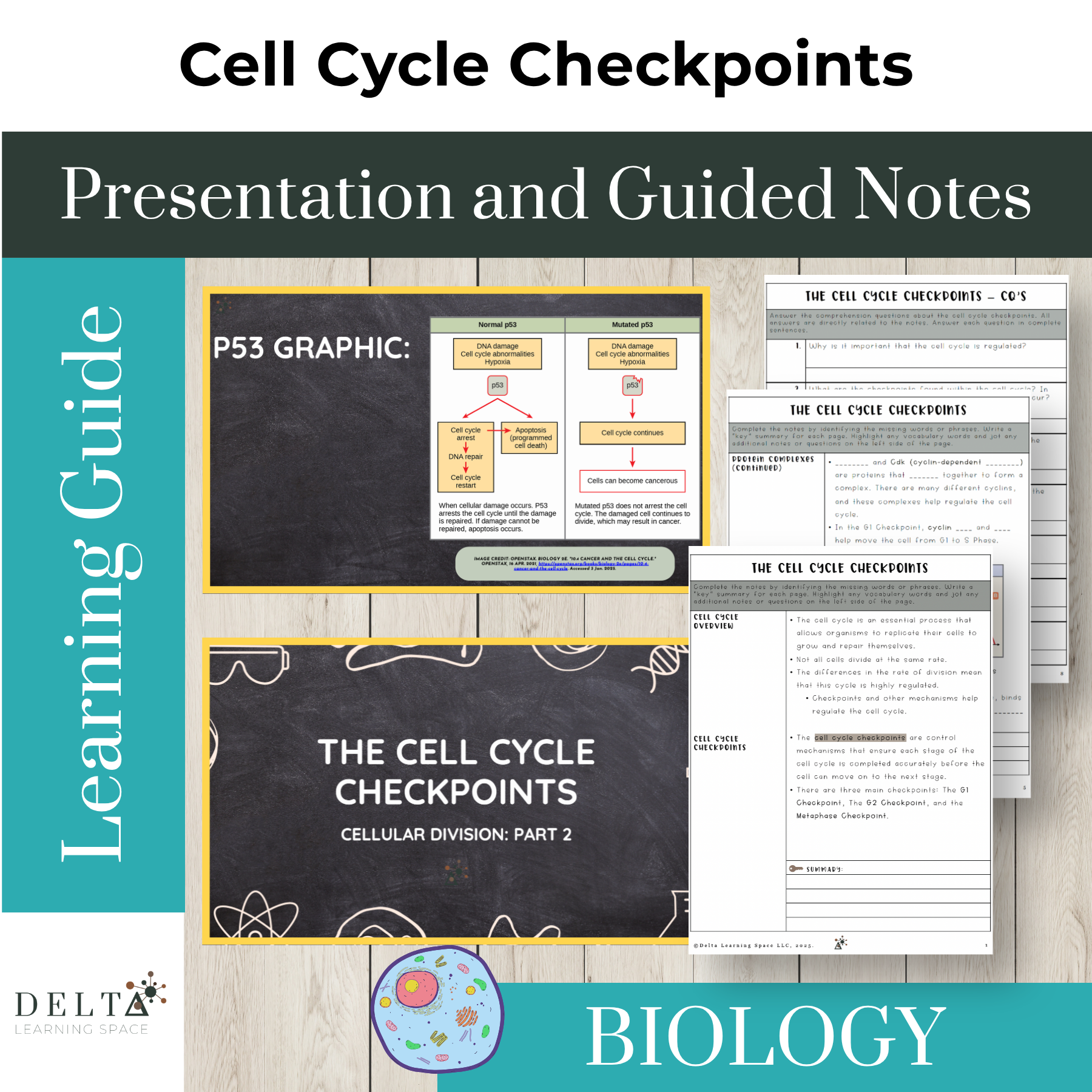
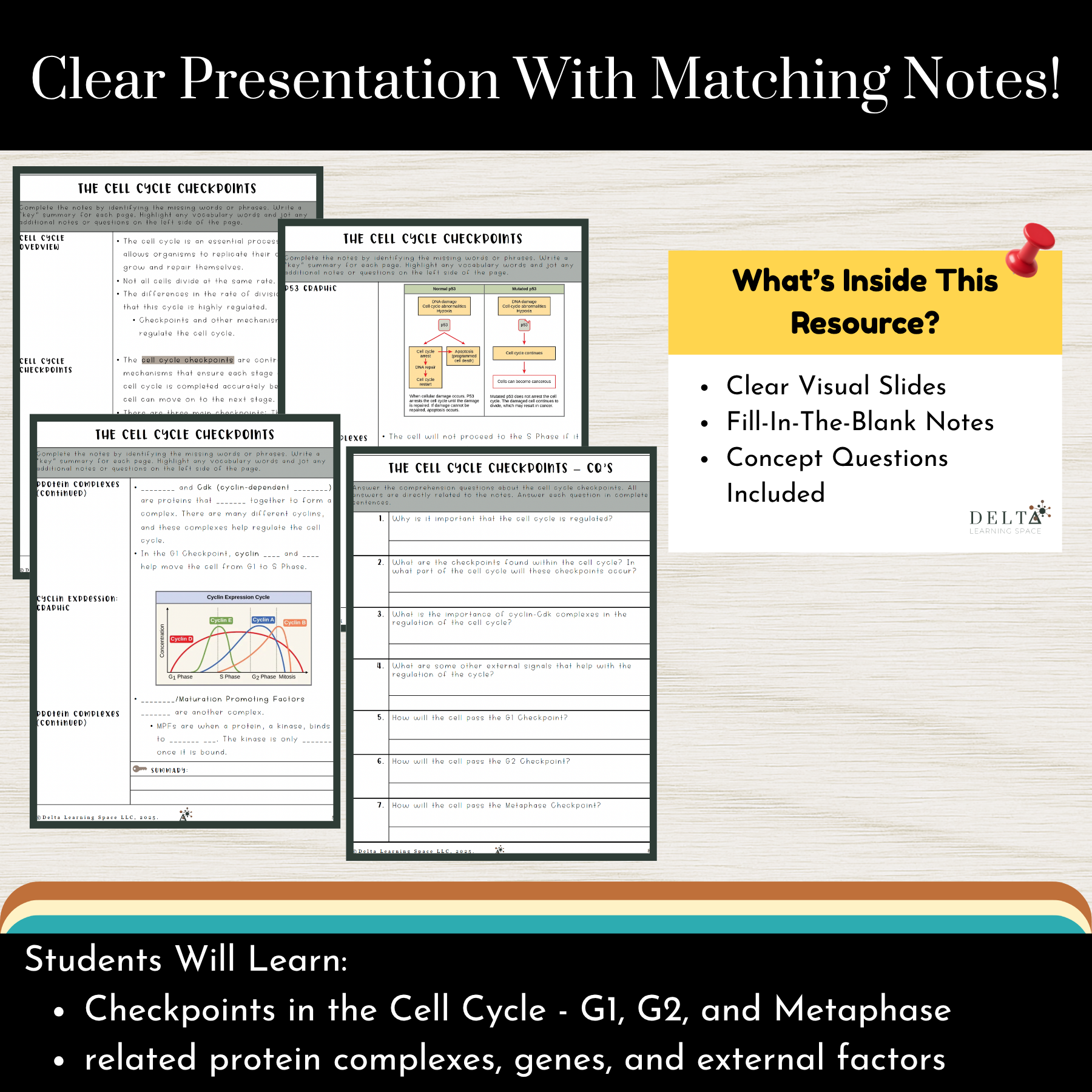
Cell Cycle Checkpoints Presentation & Guided Notes (Part 2): Build on this lesson by exploring how the cell cycle is regulated at key checkpoints.
Cell Cycle Graphic Organizer: Help students visualize connections between cell cycle phases and checkpoints.
Cell Cycle Vocabulary Organizer: Strengthen understanding of essential terms with this in-depth resource.
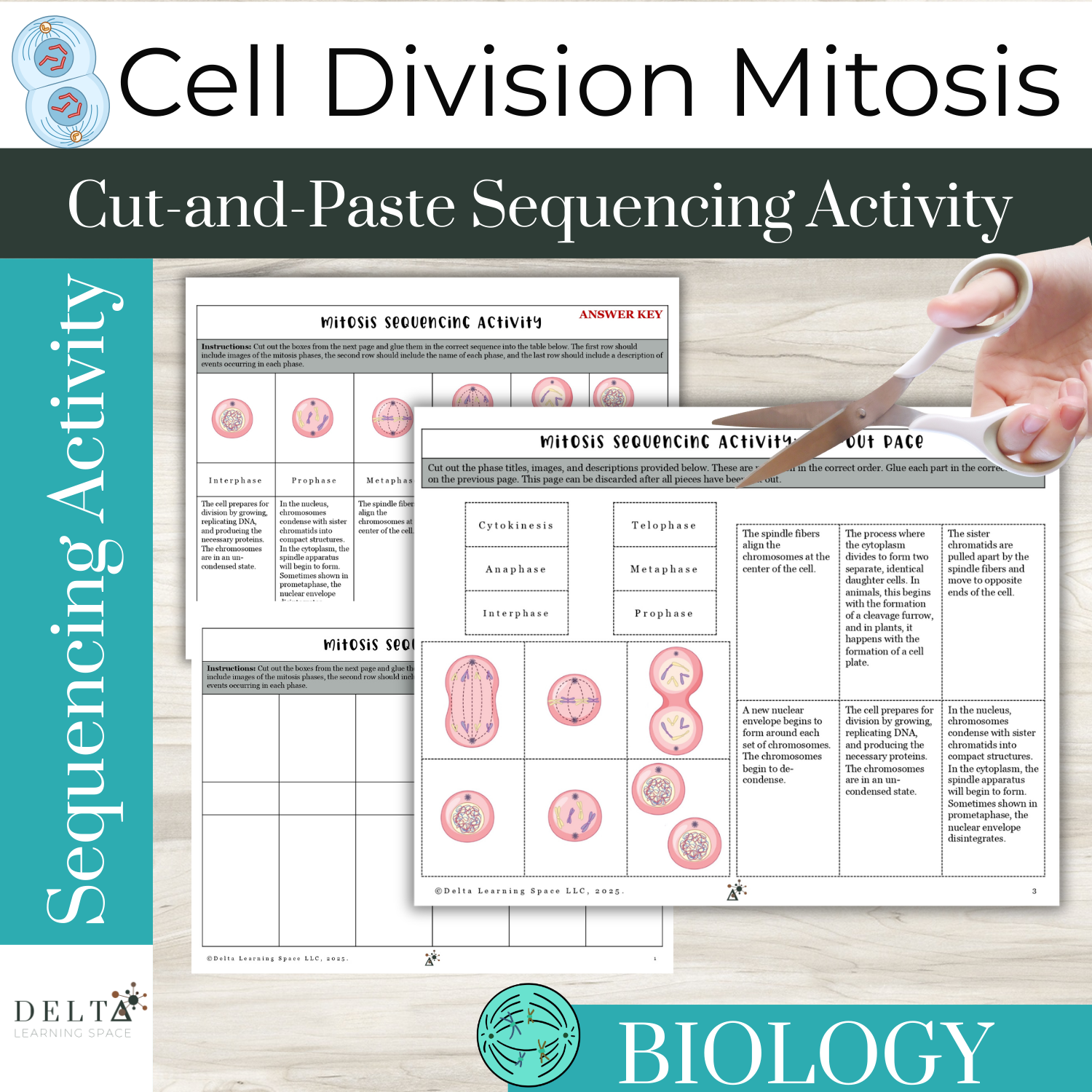
Mitosis Sequencing Cut & Paste Activity: Reinforce phase order and key events with a hands-on sequencing task.
Cell Cycle Presentation & Guided Notes (Part 1): Pair this lesson with part one for a complete overview of the cell cycle.
Prep-Free Lesson on Mitosis: Presentation & Guided Notes
Take your students' understanding of cell division to the next level with this comprehensive, ready-to-use lesson focused on mitosis. Designed for middle and high school science classes, this resource complements your teaching of the cell cycle and includes:
A visually engaging presentation walking students through the five sub-phases of mitosis (Prophase, Prometaphase, Metaphase, Anaphase, and Telophase) and how cytokinesis completes cell division in animal and plant cells.
Guided notes in two formats: a complete version for reference and fill-in-the-blank notes to promote active learning.
Comprehension questions to reinforce key concepts and assess student understanding at the end of the lesson.
Why This Resource is a Must-Have:
No Prep Needed: Simply download and teach!
Active Learning: Students stay engaged with guided notes as they follow the presentation.
Built-In Vocabulary Support: Key terms like sister chromatids, centromere, centrosomes, and kinetochores are defined and reinforced throughout.
AP-Level Recap Included: A detailed mitosis stages graphic with real cell micrographs gives advanced and AP-track students an extra layer of depth beyond the standard diagrams.
Part of a Comprehensive Unit: Ideal as a follow-up to your cell cycle and cell cycle checkpoints lessons, or as a stand-alone resource on mitosis.
Extend Learning with Related Products:
Cell Cycle Checkpoints Presentation & Guided Notes (Part 2): Build on this lesson by exploring how the cell cycle is regulated at key checkpoints.
Cell Cycle Graphic Organizer: Help students visualize connections between cell cycle phases and checkpoints.
Cell Cycle Vocabulary Organizer: Strengthen understanding of essential terms with this in-depth resource.
Mitosis Sequencing Cut & Paste Activity: Reinforce phase order and key events with a hands-on sequencing task.
Cell Cycle Presentation & Guided Notes (Part 1): Pair this lesson with part one for a complete overview of the cell cycle.


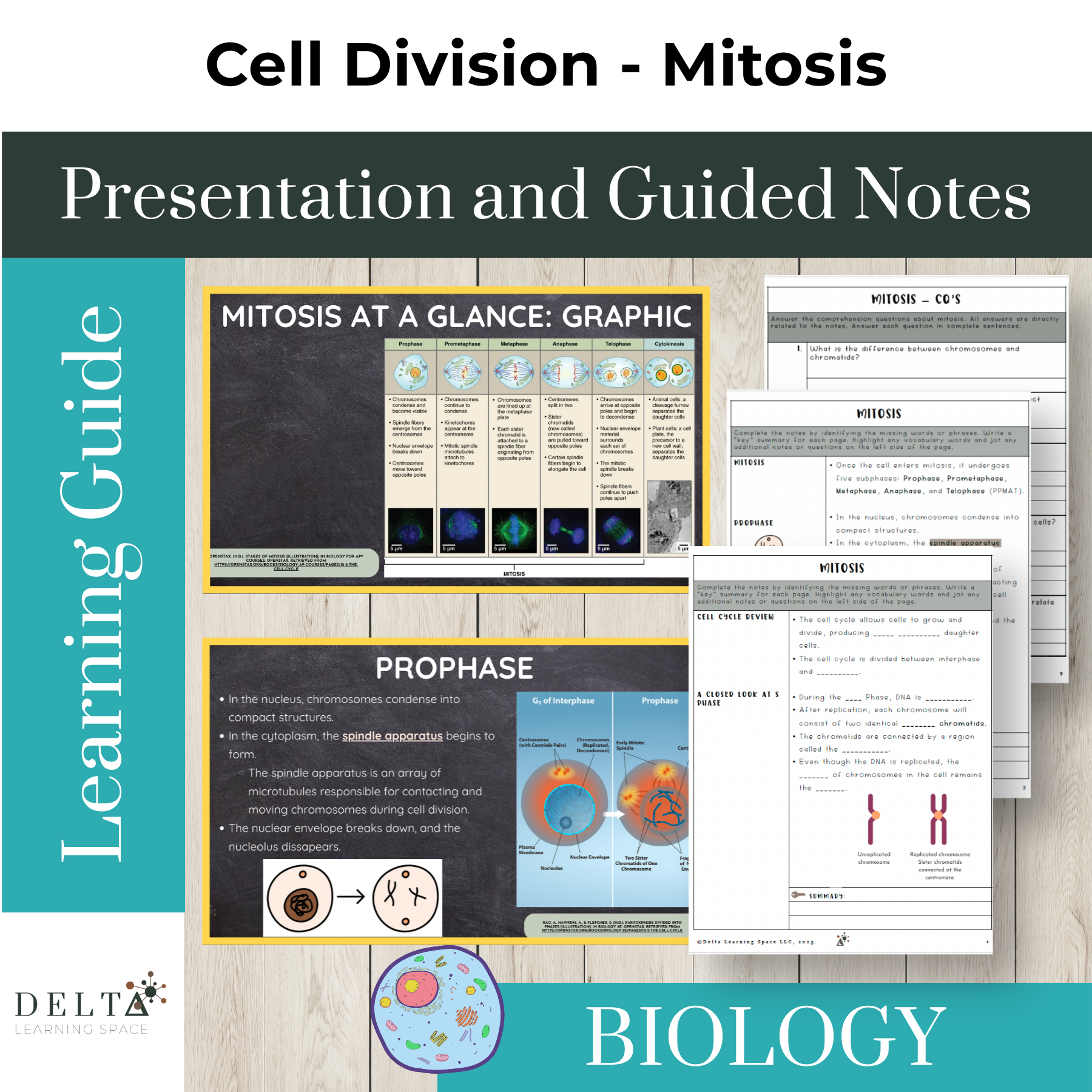 Image 1 of 3
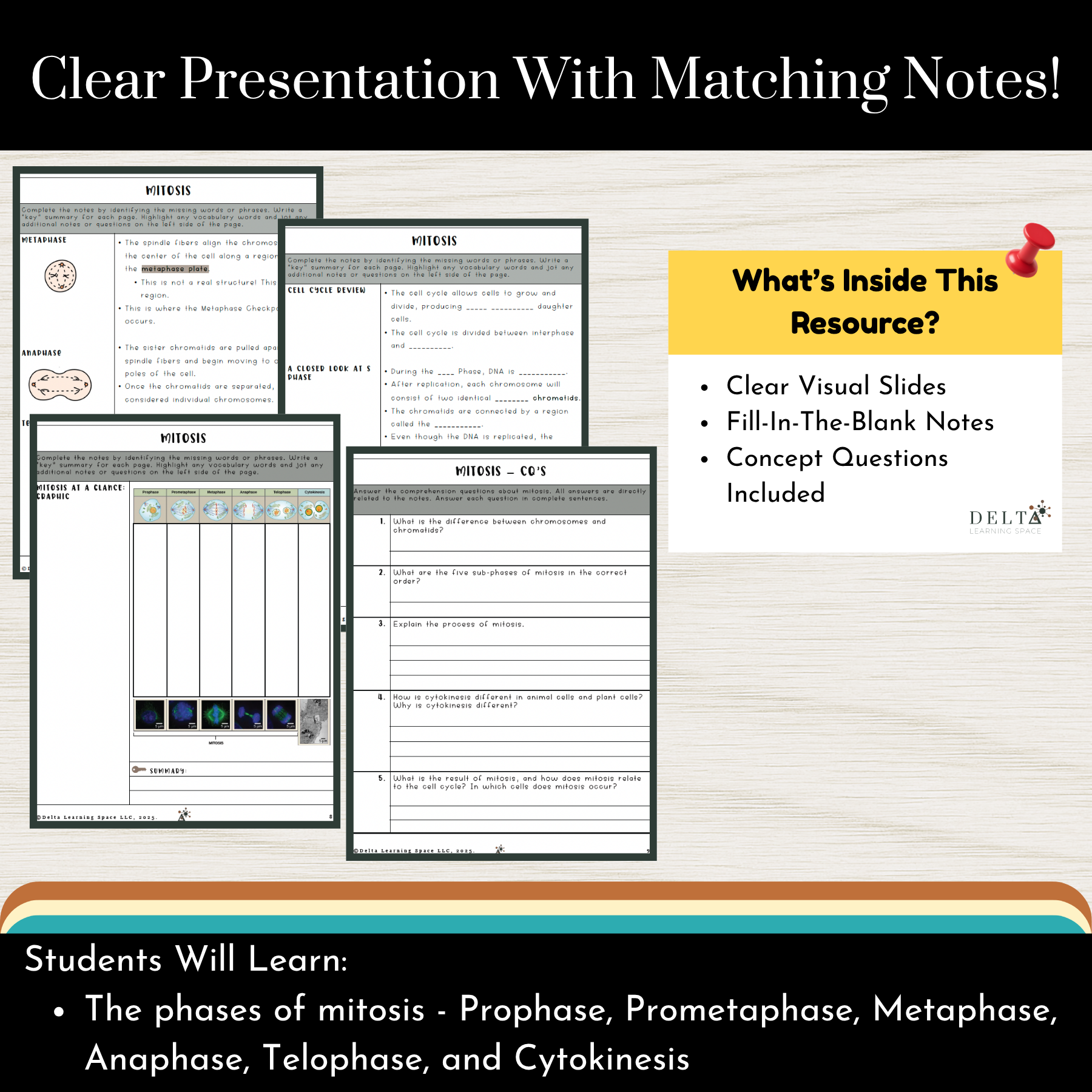 Image 2 of 3
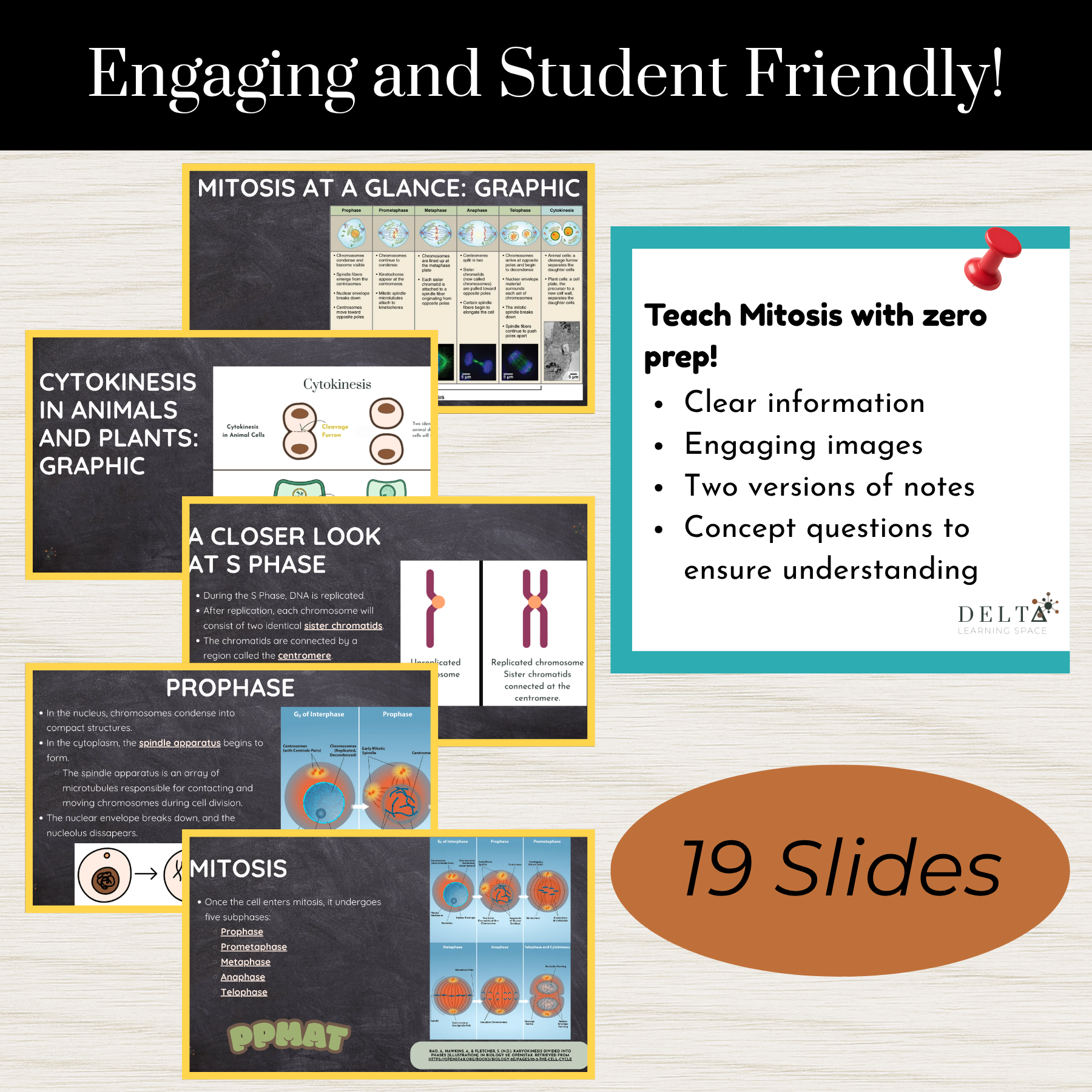 Image 3 of 3